

Events

Upcoming events
The Centre’s event programme for the 2025/26 academic year has now concluded. Please check back towards the end of August for details of next year’s event programme.
Past events
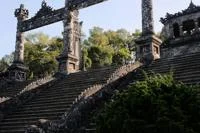
The Nature of Kingship: The Weather-World in Nineteenth-Century Vietnam (book talk)
Wednesday 10 June, 12pm-1:15pm | LSE Sir Arthur Lewis Building, Room LG.03
In this talk, Dr. Kathryn Dyt presented and discussed her book, The Nature of Kingship: The Weather-World in Nineteenth-Century Vietnam (University of Hawai‘i Press 2025), exploring its implications for our understandings of Nguyễn Vietnam.

Wednesday 3 June, 9am-5pm | LSE Sir Arthur Lewis Building, Room B.09, B.11 and B.13
The Southeast Asia Centre (SEAC) at the London School of Economics and Political Science (LSE) was delighted to partner with the Association of Southeast Asian Studies (ASEAS) to host a workshop for PhD students across the UK working on Southeast Asia.

Counting as Chinese in the Southern Seas: A decade of transimperial enumerations, c. 1901-1907
Wednesday 27 May, 12pm-1:15pm | LSE The Marshall Building, Room 2.05
In the first decade of the twentieth century, three imperial states—Britain, the United States, and Qing China—each undertook efforts to enumerate emigrant and settled Chinese populations across the transimperial region known today as Southeast Asia. Reading these competitive and highly discrepant statistical projects, Dr. Rachel Leow explored the divergences in their conceptions of ‘Chinese’, calibrated variously by language, race, birthplace, bloodline, history, and other categories.
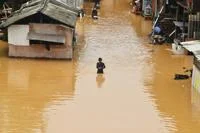
Southeast Asia Forum: Flooding in Southeast Asia - Causes, Consequences, and Policy Challenges
Wednesday 20 May, 9:00am-5pm | LSE Cheng Kin Ku Building, Wolfson Theatre & Thai Theatre
Over the course of 2025, large areas of Indonesia, the Philippines, Thailand, and Vietnam faced extensive flooding, with other countries likewise strongly affected during the year. These recent events have reminded people and policymakers across Southeast Asia of a broader trend of increasing flooding in the region, causing untold damage and disruption to people’s lives.
Wednesday 13 May, 2pm-3:15pm | LSE Sir Arthur Lewis Building, Room LG.03
In Mobilizing Mainstream Islam (Cornell University Press 2026), Dr. Saskia Schäfer explained the rise and changing shape of religious nationalism in Indonesia after the fall of Suharto in 1998. In the 2000s, a time of electoral democratization, Indonesia's religious and political landscape experienced significant competition and reshuffling as religious and political elites formed an alliance to challenge Indonesia's official policies of tolerance and religious pluralism.
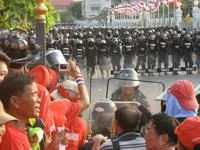
Who Says It’s Undemocratic? Value Neutrality and Autocratisation in Southeast Asia
Wednesday 6 May, 12pm-1:15pm | LSE The Marshall Building, Room 2.09
The global phenomenon of “democratic backsliding” has challenged cherished political science assumptions, including the nature of democracy and belief in value neutral research. Illiberal leaders claim democratic legitimacy while political scientists diagnose autocratisation. Does this not unmask what MacPherson (1965) saw as the assumption of the superiority of liberal principles hidden behind an “empirical” definition of democracy? In this talk, Prof. Mark Thompson argued that Southeast Asia is a fitting region to consider such issues as it has recently undergone a landslide of backsliding.

Socialist Meaning-Making Through Rice and the 1967 Rice Riots in Burma/Myanmar
Wednesday 1 April, 12pm-1:15pm | LSE The Marshall Building, Room 2.06
During Burma’s Socialist Era (1962–1988), rice was not just a staple — it was a symbol of state power and everyday resistance. Declared property of the state, rice production was tightly controlled through a web of permits and quotas. Yet farmers subverted this system, withholding high-quality grain for personal use or the black market while supplying inferior rice to the government. Dr. Tharaphi Than explored how these quiet acts of defiance turned rice into a contested site of negotiation between state and society.
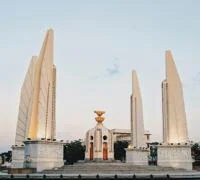
Death by a Thousand Cuts: Digital Repression and Pro-Democracy Movements in Thailand (soft launch)
Wednesday 25 March, 12pm-1:15pm | LSE Cheng Kin Ku Building, Room 2.18
How does repression in the age of digital technologies undermine pro-democracy movements in Thailand? In this talk, Dr. Janjira Sombatpoonsiri presented insights from her forthcoming book, Death by a Thousand Cuts: Digital Repression and Democracy in Thailand, which offers one of the most systematic, ecosystem-based analyses of digital repression targeting the youth-led protests of 2020–2021.

(In)formality in a ‘Singapore-like Cebu’: paradoxes and contestations in world-class city-making
Wednesday 18 March, 12pm-1:15pm | LSE The Marshall Building, Room 2.06
In this presentation, Dr. Jordana Ramalho explored the politics and practices shaping contemporary urban (re)development and world-class city-making in the Philippines.

An Interdisciplinary Approach to Empowering Resilience in Jakarta Sinking City
Wednesday 11 March, 12pm-1:15pm | LSE The Marshall Building, Room 2.06
This talk presented insights from Dr Emma Colven and Dr Zara Shabrina's Sinking City project, a British Academy-funded interdisciplinary project that brings together data scientists, social scientists, artists, and local communities to explore the social production, lived experience, and anticipated risks of environmental threats.
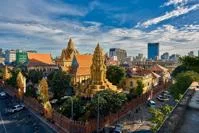
The Strongman and the Last Days of the Khmer Rouge (documentary film screening)
Wednesday 4 March 2026 5pm-7.30pm | LSE Centre Building - Yangtze Theatre (CBG 2.01)
The Strongman and the Last Days of the Khmer Rouge presented a fascinating insight into how Hun Sen has wielded political power. This story was told via in-depth interviews with Hun Sen and his colleagues and political adversaries. The film drew upon filmmaker James Gerrand’s own archive of footage, shot in Cambodia over the past 40 years. It was a revealing portrait – revealing of the Strongman’s principal character traits, his political savvy and capacity for both charm and ruthlessness.
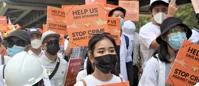
Myanmar: Problems and prospects
Wednesday 18 February, 2pm-3:15pm | LSE Centre Building, Room 1.04
A recently retired senior diplomat with the US Agency for International Development, John Groarke discussed his experience as the head of the US Government's humanitarian assistance and development program in Myanmar during 2023-2024.

Living with coloniality and precarity in Southeast Asia
Wednesday 18 February, 12pm-1:15pm | LSE The Marshall Building, Room 2.06
Precarity has emerged as a defining condition for many marginalised communities in Southeast Asia. This panel discussion - featuring Dr. Geetha Reddy, Dr. Megha Amrith and Enbah Nilah Sugurmar - brought together scholars working in the region to engage in comparative dialogue, share methodological innovations and build transnational solidarities.

Communication against Capital: Red Enlightenment at the Dawn of Indonesia (book talk)
Tuesday 17 February, 3pm-4:15pm | Online on Zoom
Communication against Capital (Cornell University Press, 2025) explored the revolutionary communication strategies of the pergerakan merah, the anticolonial "red movement" in 1920s Indonesia. Dr. Rianne Subijanto told the story of ordinary lower-class women and children and people of diverse ethnicities who waged their battles against Dutch colonialism within multiple arenas of communication, including political associations, assemblies, printed matter, schools, and shipping lines.
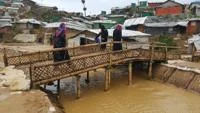
After the Exodus: Gender and Belonging in Bangladesh's Rohingya Refugee Camps (book talk)
Wednesday 11 February, 12pm-1:15pm | LSE The Marshall Building, Room 2.06
In After the Exodus (Cambridge University Press, 2024), Dr. Farhana Afrin Rahman examined how forced migration of the Rohingyas from Myanmar to Bangladesh affected the gendered subjectivities and lived experiences of Rohingya refugee women, and transformed gender relations and roles in displacement.

Beyond disinformation: Toxic positivity as influence operation in the Philippines and Indonesia
Wednesday 4 February, 12pm-1:15pm | LSE The Marshall Building, Room 2.06
Disgraced political figures have not only returned to power. They have done so with overwhelming public support. The electoral victories of Ferdinand Marcos Jr. in the Philippines and Prabowo Subianto in Indonesia are often attributed to disinformation, yet as Prof. Nicole Curato argued in this presentation, this explanation cannot fully account for the emotional resonance and cultural uptake of their campaigns.
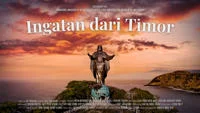
Memories of Timor (documentary film screening)
Wednesday 28 January, 5pm-7pm | LSE Centre Building - Yangtze Theatre (CBG 2.01)
An Indonesian student’s capstone research project turned into a journey of a lifetime, as she explored the dark history of Timor-Leste that she had not seen before in textbooks.

The politics of oil and gas in Timor-Leste
Wednesday 28 January, 12pm-1:15pm | LSE The Marshall Building, Room 2.06
In this talk, Prof. Judith Bovensiepen explores the politics of oil and gas in Timor-Leste through an anthropological lens, focusing on how resource extraction is entangled with colonial history and anti-colonial struggles.
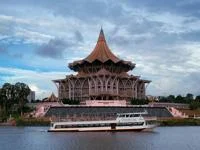
Wednesday 21 January, 12pm-1:15pm | LSE The Marshall Building, Room 1.09
In this seminar talk, Dr Arnold Puyok examined the renewed political assertiveness of Malaysia’s Borneo States - Sabah and Sarawak - and their evolving roles as regional power blocs within Malaysia’s changing federalism.
Huy Đức and the Rise and Fall of Renovation in Vietnam
Wednesday 10 December, 12pm-1:15pm | LSE Clement House, Room 1.02
In this talk, Prof. Peter Zinoman looked at the life and times of Huy Đức, the well-known Vietnamese journalist, historian and - since June 2024 - political prisoner.
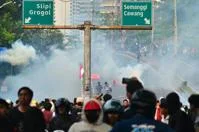
Impunity from below: Vigilantism and the state in democratic Indonesia
Monday 8 December, 12pm-1:15pm | LSE Old Building - Vera Anstey Room
Scholarship on impunity for collective violence mostly focuses on explaining those conflicts where political battle lines are clearly drawn, such as ethnic riots, electoral clashes, terrorism and civil wars. In this talk, Dr. Sana Jaffrey showed that those who get away with horrific acts of violence are often influential individuals, protected by powerful elites.
Dynasties, Oligarchies, Cartels: Barriers to Democratic Competition in Southeast Asia
Thursday 4 December, 5:30pm-6:45pm | LSE Centre Building, Room 4.17
Much as capitalism is defined by free market competition, democracy is defined by free electoral competition. Yet while economists have long recognized that violations of free market competition do not mean the end of capitalism, political scientists have struggled to theorize barriers to free electoral competition that do not amount to outright authoritarianism or even democratic backsliding. In this presentation, Prof. Dan Slater pursues this capitalism/democracy analogy to analyze three barriers to electoral competition that have afflicted democratic politics in Southeast Asia and elsewhere: 1) dynasties, 2) oligarchies, and 3) cartels.

Queering Activism in Southeast Asia (workshop)
Thursday 4 December, 9am-5pm | LSE Sir Arthur Lewis Building, Room B.07
Activism has never been tidy or transparent, but today’s turbulent political landscape makes its contradictions and creative frictions even more salient, demanding a shift in our epistemic and analytical frameworks.
Nationalism and the governance of sexuality
Wednesday 3 December, 12pm-1:15pm | LSE Cheng Kin Ku Building, Room 1.09
In this talk, Pavan Mano dissected the intricacies of nationalism in postcolonial Singapore and its entanglements with the governance of sexuality. Rejecting the romanticization of the nation as a pure bastion of belonging, his newly-published book Straight Nation theorizes nationalism as a force obsessed with continually generating threats.
Scapegoating queers: Pink-blocking as state strategy
Tuesday 2 December, 5:30pm-7pm | LSE Centre Building, Sumeet Valrani Lecture Theatre
In this talk, Prof. Meredith Weiss explored how attention to LGBTQ peoples and issues remains high in Malaysia, but this is driven far less by queer activism than anti-LGBTQ agitation, in line with a government-led, base-ingratiating ‘pink-blocking’ agenda, rooted in both ‘Asian Values’ and religious discourse. Here as elsewhere – and as ever-more evident, well beyond Southeast Asia – queer identities and acts offer a handy diversion and scapegoat.
Revisiting “the Exemplary Centre” in Contemporary Indonesia: Ideas, Ideologies, Cosmologies
Wednesday 26 Nov 2025 12pm - 1.15pm | LSE The Marshall Building, Room 2.09
In this talk, Dr. Martin Slama drew on a prominent tradition of scholarship concerning Southeast Asian concepts of power, which appears to have lost much of its appeal to observers of contemporary political contests (and other social dynamics) in Southeast Asia.
Platformization, Citizenship, and Statecraft in Vietnam: A Three-Body Problem
Wednesday 19 November, 12pm-1:15pm | LSE Cheng Kin Ku Building, Room 1.09
Engaging with contemporary debates about political subjectivities in the platform age, Prof. Marie Gibert-Flutre's talk reconceptualized digital platforms as context-dependent social infrastructures, despite their algorithmically governed management.

Affective Cohorts: Why Elite Schools Matter for Southeast Asian Politics
Wednesday 12 Nov 2025 12pm - 1.15pm | LSE The Marshall Building, Room 2.06
In this talk, Dr. Daniel Whitehouse advanced the concept of affective cohorts to illuminate the political significance of elite schooling in Southeast Asia. Affective cohorts are groups of students whose shared experiences of discipline, nationalism, and duty become enduring political resources.

Independent from Civilian Control: Military Power in Thailand in 2025
Wednesday 29 October, 12pm-1:15pm | LSE The Marshall Building, Room 2.09
In this talk, Dr. Paul Chambers reflected on 2025 - a watershed year for civil-military relations in Thailand. The military, which suffered a tarnished reputation during 2014-2023 owing to its political domination over that period, suddenly gained new popularity, which facilitated more military interventions in civilian decision-making.

Monday 27 October, 5pm-6:15pm | LSE Centre Building, Room 4.17
The last decade has been a dramatic one for Thailand's capital city. The government shifted from military to civilian control, two Bangkok-based progressive political parties did well in elections and then were banned, and massive street protests rocked the metropolis, sparking strongarm police actions and then lèse-majesté prosecutions. It's useful to place these developments within local, national, and Southeast Asia-wide contexts. In this presentation, Prof. Jeffrey Wasserstrom and Wichuta Teeratanabodee argued that it can also be valuable to widen our view and place Bangkok beside an East Asian city: Hong Kong.

Friday 24 October, 12pm-1:15pm | LSE The Marshall Building, Room 2.06
Amidst an increasingly militarised economy and fractured global politics, Dr. Trissia Wijaya's book The Political Economy of Japanese and Chinese Infrastructure Financing Governance (University of Bristol Press, forthcoming) revisited a pivotal moment in Southeast Asia’s developmental trajectory – one marked by policymakers’ obsession on infrastructure-driven growth, spurred by a wave of Chinese capital through the Belt and Road Initiative which challenged Japan’s role as a long-standing development partner in region.

Wednesday 22 October, 12pm-1:15pm | LSE Cheng Kin Ku Building, Room 1.09
In this book talk, Dr. Bernard Keo discussed how over the course of British colonial rule in Malaya, the Peranakan Chinese attempted to bring to life a complex imagination of nationhood predicated on an inclusive and multi-ethnic approach to integrating Malaya’s plural society.

Inside Southeast Asia’s Cybercrime Compounds (book talk)
Wednesday 15 October, 12pm-1:15pm | LSE The Marshall Building, Room 2.06
Based on his new book Scam: Inside Southeast Asia’s Cybercrime Compounds (Verso, 2025, co-authored with Ivan Franceschini and Ling Li), Mark Bo explored the rise of the fast-growing industry of online fraud in countries including Cambodia, Laos, Myanmar, and the Philippines.

Calibrated Engagement: Chronicles of Local Politics in the Heartland of Myanmar (book talk)
Wednesday 8 October, 12pm-1:15pm | LSE The Marshall Building, Room 2.06
In his book, Calibrated Engagement: Chronicles of Local Politics in the Heartland of Myanmar, Dr. Stéphen Huard weaved together ethnography and history to chronicle the transformation of rural politics in Anya, the dry lands of central Myanmar before the 2021 coup.

Caught in the Crossfire: Thai Military Women’s Mediated Experience and Self-Representation
Wednesday 1 October, 12pm-1:15pm | LSE Cheng Kin Ku Building, Room 2.13
In this talk, Dr. Chanapang ‘Natty’ Pongpiboonkiat explored how women military personnel in the Royal Thai Armed Forces construct their identities and represent themselves through social media, highlighting how their lives and who they become are shaped by the complex intersection of military/militarisation, media, and gender practices.

Majapahit: Intrigue, betrayal and war in Indonesia's greatest empire
Tuesday 24 June, 6:30pm - 8pm
Join Herald van der Linde as he presents his new book 'Majapahit: Intrigue, betrayal and war in Indonesia's greatest empire'. He tells the Majapahit story through the lens of intrigue, murder, secrets, suspense, revenge, and war in a land filled with beautiful temples and imposing palaces.

Sustainable Urban Development in Ho Chi Minh City, Vietnam
Wednesday 11 June, 12pm - 1:15pm
In this seminar, Albert T. King (Visiting Professor in Practice, LSE) focuses on a set of three pioneering joint-venture infrastructure projects which were put in place in Ho Chi Minh City, Vietnam in the 1990s. These projects transformed a swamp with some low-yielding agriculture land into a green, vibrant, sustainable urban centre that now serves 250,000+ people with many newly created jobs and newly established educational institutions. The infrastructure projects include Tan Thuan Export Processing Zone, Vietnam’s first export-oriented industrial zone; Hiep Phuoc Power Plant, Vietnam’s first foreign invested Build-Operate-Own electric power generation plant; and Phu My Hung Saigon South Urban Development, Ho Chi Minh City’s southward urban expansion plan.

Monday 2 June, 10:00am - 3:00pm
SEAC is hosting a workshop for PhD students across the UK working on Southeast Asia. The workshop is designed to allow UK university-based research students working on the region to present their work among their peers for feedback and to provide a broader opportunity for sharing ideas and information related to ongoing doctoral research focused on Southeast Asia.

International Symposium on 70 Years Since the Bandung Conference
Tuesday 27 May, 10am - 4pm
Bandung 1955 was a historical marker that broke the ground for third-world internationalism to develop against the logic of cold-war geopolitical monopoly. It preceded the non-aligned movement that expanded Asian-African solidarity to Latin America. 70 years on, where are we today concerning the legacies of Bandung, from decolonization to ‘the five principles of peaceful coexistence’? This seminar brings speakers from different parts of Asia to reflect on the trajectory and its regional and global lessons. Is the ‘Bandung spirit’ alive anymore? What is the ‘third world’ then and the ‘global south’ now? Where might we redefine visions for a tri-continental project in the enduring struggles against imperialism, colonialism, and variants of neoliberal globalization? How can we engage such a project critically and intellectually in a world of multiple crises?
Thursday 22 May, 9am - 5:30pm
Over the past decade, observers and scholars of international relations have begun to focus on intensifying ‘geoeconomic’ competition and ‘weaponized interdependence’, with close attention to the deepening rivalry between China and the United States. Within this broader, global trend, Southeast Asia has loomed large as a crucial arena of geoeconomic contestation, especially between China, the United States, and Japan in particular. Such contestation has ranged from major transportation infrastructure megaprojects to transoceanic submarine fibre-optic cable links to semiconductor supply chains, with the incoming Trump Administration promising to escalate the ongoing ‘chip war’ and existing tariffs on Chinese goods into an even broader and deeper trade dispute. Against this backdrop, the LSE Saw Swee Hock Southeast Asia Centre’s annual Southeast Asia Forum in 2025 brings together leading specialists from across the world to discuss the implications of global trends and ongoing geoeconomic contestation for Southeast Asian economies, polities, and societies.

This is not the 90s': Myanmar and Change in ASEAN's Normative Order
Wednesday 21 May, 12pm - 1:30pm
In this presentation, Dr Aarie Glas (Northern Illiois University) explores ASEAN’s response to the 2021 coup in Myanmar. While scholars and practitioners often portray ASEAN as a relatively cohesive community of states united by a long-held and relatively stable set of norms – the "ASEAN way" – this presentation shows that ASEAN’s response to the coup has been driven by internal contestation.

Frontline Poets: The Literary Rebels Taking on Myanmar's Military (book talk)
Tuesday 20 May, 6:30 - 8:00pm
In Myanmar, poetry and popular uprisings have long been intertwined, from anti-colonial movements to pro-democracy protests. But who are the poets? Why have they played such a unique role throughout Myanmar’s history? And why does poetry still resonate in Myanmar's political scene while it fades into irrelevance elsewhere? The forthcoming "Frontline Poets: The Literary Rebels Taking on Myanmar's Military" by Aung Naing Soe and Joe Freeman seeks to answer these questions, while also featuring many extraordinary but sorely overlooked Burmese poems published in original English translations for the first time.

Thursday 15 May, 12pm - 1:15pm
Based on informal conversations with experts from different sectors in Indonesia, Japan, and China, this presentation by Caixia Mao (PhD candidate in Urban Planning at Columbia University) applies the concept of techno-politics to unpack the myths surrounding how HSR technology, Japan’s signature technology, was used in China’s challenge to Japanese geopolitical and economic dominance in Indonesia. Moreover, it explains how China, by winning the Jakarta-Bandung case, asserted itself as an equal, or even superior, technological power compared to Japan, thereby altering the conventional image of China as a producer of "lower-quality and cheaper products."

Vietnamese Migrants and UK Bordering Practices
Wednesday 14 May, 12pm - 1:15pm
The tragic deaths of 39 Vietnamese migrants in a lorry in Essex (UK) in 2019, drew media and policy attention to the perilous journeys made by undocumented Vietnamese migrants. Since then, unprecedented numbers of Vietnamese migrants have taken the ‘small boats’ route from Calais, France across the English Channel. Drawing upon multi-sited, empirical qualitative research conducted in Vietnam and the UK, this talk explores the social, economic and development issues shaping the specific labour migration to the UK from north-Central Vietnam. Dr Tamsin Barber (Oxford Brookes University) will examine Vietnamese migrants’ understanding of the imperatives underlying their migration journeys, their labour market experiences in the UK and how they are perceived by migrant support organisations.

Conflict Brokers: How Local Politicians Make or Break Insurgencies
Thursday 8 May, 12pm - 1:30pm
Why do insurgencies persist, even in relatively strong states with significant counterinsurgency investments? This book project argues that the answer lies not just in state capacity or civilian loyalty, but in the political behavior of local powerbrokers. In many conflict zones, municipal- and district-level actors—elected officials, clan leaders, or informal notables—control how state authority is implemented on the ground. These actors can serve as critical intermediaries in counterinsurgency, or as quiet enablers of insurgents. Drawing on original data from the Philippines and comparative evidence from Afghanistan, Colombia, and beyond, Dr Dotan Haim (Florida State University) shows how their decisions are shaped by the structure of their political networks, including access to state patronage, rivalry with local competitors, and contagion through peer ties.

Social media's algorithmic affordances for authoritarian repression in Myanmar
Wednesday 7 May, 12pm - 1:15pm
There are growing reports on autocrats’ cyber armies that run anti-dissident campaigns across multiple digital platforms on an industrial scale. Nonetheless, there lacks research that systematically examines the platform affordances that enable such coordinated repression. In this talk, Dr. Mai Van Tran (Vrije Universiteit Brussel) presents her latest co-authored study that scrutinises the extent to which the algorithmic curation, moderation, and design by social media platforms might facilitate cross-platform authoritarian repression, with evidence from conflict-ridden Myanmar.

The Neighbourhood of Southeast Asia and ASEAN: More Region, Less Regional Organisation
Wednesday 26 March, 12pm - 1:15pm
While they are often used interchangeably, Southeast Asia and ASEAN are conceptually and historically distinct. Explaining ASEAN as the central platform for East Asia’s regional architecture-building, commonly known as ‘ASEAN centrality’ requires understanding Southeast Asia as a diverse collection of multilingual, multiethnic, and multireligious societies and peoples whose governments resemble an equally wide array of regime types. In this seminar, SEAC Visiting Professor Thitinan Pongsudhirak (Chulalongkorn University) sets out to investigate the sources of ASEAN’s divisions and weaknesses with the premise that ASEAN can only be strong and effective when the great powers in its neighbourhood are at a relative peace and in a moving balance. When the major powers are in an outright conflict, ASEAN is weakened and susceptible to co-optation and clientelism despite hedging manoeuvres to maintain individual space and regional autonomy.

Navigating Disruptions: Southeast Asia's Future in Global Value Chains
Monday 24 March, 12pm - 1:15pm
Southeast Asia has long been a crucial hub in global value chains (GVCs), serving as a key production and export base for industries ranging from textiles to high-tech electronics and automotive manufacturing. However, the region now faces unprecedented challenges as geopolitical tensions, economic nationalism, and shifting global trade dynamics reshape the international economic landscape.In this seminar, Prof Pavida Pananond (Thammasat University) examines Southeast Asia’s evolving role in GVCs and explores how multinational corporations (MNCs) and local firms are responding to these disruptions
London Burma Reading Group: Inter-generational Myanmar activism and the quest for social justice
Thursday 20 March, 6:30 - 8:00pm
Myanmar has a long history of armed conflict and political repression, culminating in the 2021 military coup and its repressive aftermath. Consequently, Myanmar activists have become seasoned in their resistance strategies, while also innovating their tactics. Women, youth, ethnic and sexual minorities now play a larger role in the post-coup revolutionary movement, with new generations challenging ingrained social hierarchies and discriminatory practices. They cherish solidarity, inclusivity and intersectionality with the goal of achieving not only a federal democratic system but also transformative, long-term social justice. Restricted civic space and severe limitations on physical meetings and mobility have accelerated young activists’ adoption of digital networks - the tools they grew up with - to mobilise, fundraise, and share their goals. To counter increased military violence and repression, many have also turned to violent resistance tactics.
Based on interviews conducted in 2024-2025, Maaike Matelski & Cecile Medail explore show today’s activists build on and adapt from previous generations of activists that resisted the military from the 1960s through the 2010s, by asking how intergenerational dynamics influence the evolution of ideological frameworks and strategies within their social movements. We argue that Myanmar’s current resistance to military rule stems from two key factors: the structural changes experienced by Gen Z, including new technologies and increased civil liberties in the late 2010s; and the country’s long legacy of resistance movements. While the structural changes have provided the momentum for unprecedented popular mobilisation, it is the intergenerational legacy of resistance that has catalysed a deeper ideological transformation, including criticism of past and current politicians and resistance leaders. If you are interested in attending please email: t.thu@lse.ac.uk
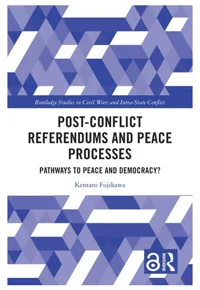
Do Post-Conflict Referendums Promote Peace and Democracy? East Timor and Beyond
Wednesday 19 March, 12pm - 1:15pm
In this seminar, Dr. Kentaro Fujikawa (Nagoya University) explores the various positive, negative, and often unexpected impacts post-conflict referendums have on conflict resolution and peacebuilding based on his new book, Post-Conflict Referendums and Peace Processes: Pathways to Peace and Democracy? (Routledge 2025). The talk will discuss opposing views on the utility and dangers associated with post-conflict referendums in general and offer detailed analysis of the 1999 referendum in East Timor in particular. What role, positive or negative, did the referendum play in conflict resolution? Moreover, did this monumental event of holding a referendum have any impact on Timor-Leste, which emerged as a result of the referendum? The talk will discuss these issues, utilizing original interviews including those conducted in Timor-Leste, and will compare the experience there with other cases of post-conflict referendums in Eritrea (1993), Southern Sudan (2011), and Bougainville (2019).
The Hydro-Crypto Nexus in Laos: Paradoxes and Perils of the Demand for Decarbonization
Wednesday 12 March, 12pm - 1:15pm
Lao People’s Democratic Republic (LPDR) has often been positioned as a central provider of regional hydroelectric power to neighboring Southeast Asian countries and China. In 2021, the Lao government introduced a state-sponsored industrial policy to foster the conversion of hydropower dam sites and the sale of hydro-electricity into a revenue-generating domestic crypto-mining sector. In this talk, Pon Souvannaseng (Bentley University) will discuss how the hydro-crypto plan came to be and the major pitfalls, tradeoffs, and unintended environmental, social and economic consequences that have accompanied the Lao state’s venture into building a hydro-crypto nexus.

London Burma Reading Group: Kachin Amber, Burmese War, and an International Ethics Debate among Paleontologists
Monday 10 March, 6:00 - 7:30pm
The amber stones that are mined in northernmost Burma's Hukawng Valley have become an important source of knowledge about life-forms, ecology, and evolution a hundred million years ago. Yet, some paleontologists have moved to boycott research and publications that uses such "blood amber" from a war zone, especially if it might profit the Burmese military. Hukawng Valley amber and the Burmese war have thus become a topic of a heated ethics debate among paleontologists from the West, China and elsewhere. Laur Kiik will explore this international ethics debate among natural scientists—but does so from a perspective of Kachin and Burma Studies. How can Area Studies best contribute to such Burma-related debates among natural scientists? If you are interested in attending please email: t.thu@lse.ac.uk

Bud Dajo, 1906 – Recovering the Story of an American Atrocity in the Southern Philippines
Wednesday 5 March, 12pm - 1:15pm
In March of 1906, US military forces killed 1000 men, women and children during an assault on a Moro stronghold at Bud Dajo in the southern Philippines. The Massacre of Bud Dajo rightfully belongs in the same category of historical atrocities as Wounded Knee in 1890 or the better-known My Lai Massacre of 1968. Yet while Wounded Knee and My Lai have become emblematic of American atrocities during the ‘Indian Wars’ and Vietnam War, respectively, Bud Dajo has faded into obscurity. Prof Kim A. Wagner (Queen Mary, University of London) discusses the massacre, examines the evidence and addresses the methodological challenges of recovering silenced voices and perspectives of colonial violence.

Battles for pluralism: Indonesia, Malaysia, and the great democratic unknown
Wednesday 19 February, 5pm - 6:30pm
In a pattern oft-repeated across world history, the culturally diverse nations of Indonesia and Malaysia have moved in recent decades from strict hegemonic rule to open political competition. Out of one, many. Whenever and wherever such transitions occur, most typically with the end of an empire or the demise of a dictatorship, it is highly uncertain whether democracy and diversity can flourish – either alone or in tandem. In Battles for Pluralism, Prof Dan Slater (University of Michigan) historically traces these parallel decades-long transitions in two of the world’s only Muslim-majority democracies.
The Will to Govern: Territorial Redivision and the Politics of Sovereignty in West Papua
Wednesday 12 February, 12pm - 1:15pm
After the 1998 Indonesia’s democratic reforms, the central government embarked on political projects of decentralization to shift the centralistic character of the Indonesian state. These decentralization reforms include the granting special autonomy to secessionist regions, including the easternmost and marginal region of West Papua. Looking specifically at the provincial level pemekaran, this presentation by Veronika KUSUMARYATI (University of Wisconsin-Madison) wishes to contribute to the conversation on the legal and political meanings of indigenous self-government.
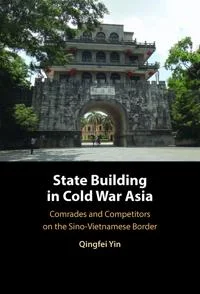
State building in Cold War Asia: comrades and competitors on the Sino-Vietnamese border (book talk)
Wednesday 5 February, 5pm - 6:30pm
Departing from conventional studies of border hostility in inter-Asian relations, Yin Qingfei explores how two revolutionary states – China and Vietnam – each pursued policies that echoed the other and collaborated in extending their authority to the borderlands from 1949 to 1975. Weaving together international, national, and transnational-local histories, the speaker presents a new approach to the highly volatile Sino-Vietnamese relations during the Cold War, centering on the two modernising revolutionary powers' competitive and collaborative state building on the borderlands and local responses to it.
This event was co-hosted with the Department of International History.

Decentralisation, Healthcare Privatisation, and Women's Health: The Indonesia-Philippines Comparison
Wednesday 29 January, 12pm - 1:15pm
How do decentralised government and private healthcare options shape women’s preferences regarding maternal healthcare and desire to use it? Through a comparison in take-up rates of prenatal care in Indonesia and the Philippines between 1997 and 2017, Prof Sarah Shair-Rosenfield (University of York) traces the potential for decentralisation to "close the gap" between traditionally strong urban and traditionally weak rural care provision and access. However, in the earliest stages of decentralisation, widespread healthcare privatisation played a key substitutive role in urban areas, which offset improved local public provision in rural areas.

Revisiting the Vietnam War Fifty Years after the Fall of Saigon
Tuesday 21 January, 4pm - 5:15pm
In this talk, Peter Zinoman (University of California, Berkeley) examines the western-language historiography of the Vietnam War, including the shifting political dynamics of the field and the evolution over time of contrasting schools of interpretation. Special attention will be paid to the role of area studies scholarship and Vietnamese language competency in the development of the field.

Wednesday 4 December, 5pm - 7pm
As a hub for Southeast Asia in the UK and Europe, SEAC is hosting a roundtable discussion bringing together activist, legal, and academic expertise to discuss the exploitation of Filipina domestic workers in the UK. Join us to hear from local NGOs and community organisations about the lived experiences of Filipina domestic workers and the legal challenges constraining efforts to address their ordeals of human trafficking and exploitation and to advance their claims to asylum in the UK. The discussion will shed light on the significant contributions of Filipina migrants in the UK, who represent a large part of the UK’s domestic workforce. The discussion will further explore the critical work that is being done to expand and protect domestic worker’s rights in the UK.
The Politics of Coercion: State and Regime Making in Cambodia
Wednesday 27 November, 12pm - 1:15pm
In The Politics of Coercion: State and Regime Making in Cambodia (Cornell University Press, 2024), Dr Neil Loughlin explains the persistence of Cambodia's authoritarian regime for more than four decades. This newly published book provides a historically grounded investigation of the country's ruling coalition: political elites, many drawn from within the state's coercive apparatus, who, in coordination with state-dependent tycoons, have come to control Cambodia's politics and its economy. Loughlin presents new empirical data foregrounding the coercive underpinnings of the modern Cambodian state and its party, the Cambodian People's Party (CPP). The focus on coercion reflects the regime's conflict and postconflict evolution and extractive political economy as the ruling coalition failed to channel popular interests through its political institutions, thus resorting either to low-intensity forms of coercion such as intimidation and surveillance or to high-intensity coercion such as violent crackdowns and extrajudicial killings.

Inter-Asia Seminar Series: Interrogating Asia's Urban Futures
Thursday 21 November, 12pm-1:15pm
Asia is renowned for its rapid urbanization, yet this growth has unfolded unevenly across the region, affecting places and people in variegated ways. An urgent question facing the region is how to plan and govern cities in the context of climate emergencies and whether the current pace of urbanization can continue without compromising the well-being of urban populations. Within this context, the panel brings together diverse perspectives to discuss the future of Asian cities, presenting some of their key arguments rooted in their latest research.

Kretek Capitalism: Making, Marketing, and Consuming Clove Cigarettes in Indonesia
Wednesday 20 November, 12pm-1:15pm
Indonesia is the world’s second-largest cigarette market: two out of three men smoke, and clove-laced tobacco cigarettes called kretek make up 95 percent of the market. Each year, more than 250,000 Indonesians die of tobacco-related diseases. To account for the staggering success of this lethal industry, Kretek Capitalism examines how kretek manufacturers have adopted global tobacco technologies and enlisted Indonesians to labor on their behalf in fields and factories, at retail outlets and social gatherings, and online. Dr. Marina Welker's (Cornell University) research charts how Sampoerna, a Philip Morris subsidiary, uses contracts, competitions, and gender, age, and class hierarchies to extract labor from workers, influencers, artists, students, retailers, and consumers. Critically engaging nationalist claims about the commodity’s cultural heritage and the jobs it supports, she shows how global capitalism has transformed both kretek and the labor required to make and promote it.

Understanding Vietnamese History with a View from the Sea
Wednesday 13 November, 12pm-1:15pm
Vietnamese history has been essentialised in four words: Bac cu, nam tien (resist to the north, expand to the south). In this narrative, all other elements – ideologies, economy and society were weaved around this central drive, as the key to understand Vietnamese history. In this talk Professor Li Tana (Australian National University) will discuss this theme with her new book A Maritime Vietnam: From earliest time to the 19th century (Cambridge University Press, 2024). It is a borderless history rather than a history of states. Even so, the journey through the book’s 10 chapters shows repeatedly that it is only when viewed against this expansive background that some of the more important, sometimes even determinative, features of Vietnam’s past can be properly understood.

Monday 11 November, 12pm-1:15pm
This seminar with Dr. Vilashini Somiah (SEAC Visiting Fellow, Universiti Malaya) explores post-COVID-19 research on Indigenous and migrant women in Kundasang, a district in Sabah, Malaysia. Central to the study is Mount Kinabalu, a spiritual entity for the local community. The research is based in two villages: Bundu Tuhan, a Catholic Indigenous community, and Cinta Mata, where Muslim women have settled through marriage. These women reclaim gendered spaces amid gentrification, Islamic movements, and rapid urban transformation. Despite traditional expectations as wives and mothers, the pandemic has pushed many into new roles as breadwinners. The study, grounded in gender and identity theories, highlights their resilience and evolving responsibilities, shedding light on their crucial role as custodians and gatekeepers of their communities during economic recovery and urban change.
Co-hosted with the Department of Anthropology.
London Burma Reading Group
Thursday 31 October, 6:30-8:00pm
The London Burma Reading Group invites you to an upcoming networking social event at the London School of Economics (LSE) on October 31st. This will be an event to facilitate exchange among those studying or working on Myanmar, or those whose research has implications for Myanmar. We hope it will be an event of exchange and conversations among students, academics, researchers, and those more generally interested in the country. Though the event will be at the LSE, we strongly encourage those from other universities and those beyond academia to join us.

Coups and Crises in Myanmarand Thailand: Implications for Southeast Asia/ASEANand Beyond
Wednesday 30 October, 12pm-1:15pm
Myanmar’s military takeover in February 2021 and Thailand’s last two coups in September 2006 and May 2014 have dramatically undermined democratisation in both countries, significantly accounting for the democratic "rollback" around the world. As a first in Southeast Asia, Myanmar’s coup succeeded in its execution but is failing in its implementation and consolidation. The ensuing civil war there – what local anti-coup insurgents deem a ‘revolution’ – is tipping in favour of a resistance coalition comprising the inchoate civilian-led National Unity Government, Ethnic Armed Organisations and ubiquitous squads of People’s Defence Force. That Myanmar’s future is up for grabs should behove Aseanmember states and the wider international community to help broker dialogue and negotiations to reimagineand reconstitute a viable new country. While Thailand’s twin coups ended up with new constitutions and general elections, conservative forces have held sway. Thailand has entered an unmistakeable endgame that pivots around the military’s and monarchy’s roles in a contested constitutional order with rising disenchantments and demands from below for reform and modernisation. This seminar with speaker Professor ThitinanPongsudhirak(ChulalongkomUniversity), will aim to tease out issues and implications from what’s happening in both Myanmarand Thailand for Aseanand the Southeast Asia neighbourhood on the dynamic spectrum between autocracy and democracy in view of the geostrategicconflict between the United States and China.
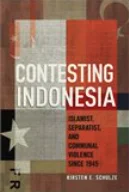
‘Book Talk - Contesting Indonesia: Islamist, Separatist and Communal Violence since 1945’
Wednesday 23 October, 12:30pm-1:45pm
In her new book Professor KirstenE. Schulze(LSE) examines Islamist, separatist and communal violence across Indonesian history since 1945 through six case studies. She asks why this violence only erupted in some areas of Indonesia despite the shared history. Looking at where the violence is located not just in a geographic sense but above all in a conceptual sense, she explores Islamist, separatist, and communal violence in relation to the notion of the national imaginary as well as in relation to the concept of belonging.
The Ripple Effect: China's Complex Presence in Southeast Asia
Wednesday 16 October, 12pm-1:15pm
Many studies of China's relations with and influence on Southeast Asia tend to focus on how Beijinghas used its power asymmetry to achieve regional influence. Yet, scholars and pundits often fail to appreciate the complexity of the contemporary Chinese state and society, and just how fragmented, decentralized, and internationalizedChina is today. In The Ripple Effect, Dr. EnzeHan (University of Hong Kong) argues that a focus on the Chinese state alone is not sufficient for a comprehensive understanding of China's influence in Southeast Asia. Instead, we must look beyond the Chinese state, to non-state actors from China, such as private businesses and Chinese migrants. These actors affect people's perception of China in a variety of ways, and they often have wide-ranging as well as long-lasting effects on bilateral relations. Looking beyond the Chinese state's intentional influence reveals many situations that result in unanticipated changes in Southeast Asia.

Colonial Debris: The Struggle For Land and Citizenship in Indonesia
Wednesday 9 October, 5pm-7pm
Indonesian filmmakers explore why their country has so many land conflicts. As they film the protests of communities against palm oil companies and real estate developers taking their land, they find that the roots of these conflicts go back to Indonesia’s colonial past. When in the 19th century the Dutch colonial rulers claimed ownership over most of Indonesia’s land, they weakened the land rights of ordinary Indonesians. This heritage lingers, as in contemporary Indonesia the land ownership of ordinary Indonesians remains restricted. With the police siding with companies, the many demonstrations that communities organize seem to have little effect. Yet after long struggles some communities manage to recover their land, showing the viability of an alternative path to economic development. After the screening there will be a Q&A with Professor Ward Berenschot (University of Amsterdam), a researcher at KITLV and University of Amsterdam and involved in the making of this documentary.
The Crypto-Colonial Heritage of Modern Thailand (V)
Wednesday 9 October, 11:30am-1pm
Professor Michael Herzfeld (Harvard University) will discuss the status of Thailand as an example of "crypto-colonialism" – a phenomenon in which declarations of independence and of high civilizationconceal elite arrangements with colonial powers whereby the alleged freedom turns out to be highly conditional, and in which the colonial powers’ "civilizationaldiscourse" reproduces locally the humiliation of the nation-state by the colonial powers. Using examples drawn from ethnographic as well as historical sources, Herzfeldwill also place Thailand’s current dilemmas in a global context, with specific reference to the political evolution of Greece and Nepal.
Co-hosted with the Department of Anthropology
Wednesday 2 October, 12:00pm-1:15pm
Like Switzerland, Singapore is a country ranked among the least corrupt in the world that is simultaneously accused of facilitating cross-border crime and tax evasion on an industrial scale. The 2022 Corruption Perceptions Index of Transparency International (TI) ranked Singapore the fifth cleanest country worldwide. Nonetheless, Tax Justice Network (TJN) ranked Singapore the ninth most egregious corporate tax haven in the world and the third most secretive. This presentation by Dr. Joe Studwell(UK's Overseas Development Institute) considers the history, current political settlement and regional role of Singapore as a conduit for cross-border flows of dirty money as well as international pressures for reform.
Wednesday 12 June, 12:00pm-1:15pm
This roundtableevent brings together academic, policymaking and activist expertise to discuss the prospects for peace in Myanmar. At this crucial juncture in Myanmar’s political history, the speakers reflect on the dynamics that have led up to this major point of crisis and transition, and the prospects for moving beyond violence and war to a new future.

Thursday 6 June, 10:00am-3:00pm
SEACis hosting a workshop for PhD students across the UK working on Southeast Asia. The workshop is designed to allow UK university-based research students working on the region to present their work among their peers for feedback and to provide a broader opportunity for sharing ideas and information related to ongoing doctoral research focused on Southeast Asia.
We are unable to provide financial support for travel or accommodation in connection with participation in the workshop, but we hope that provision of the venue and other amenities for the workshop will enable and encourage participation from among PhD students working on Southeast Asia across the UK.

Inter-Asia Seminar Series: Youth In Search Of A Future: Living Precariously In Compounded Crisis
Thursday 30 May, 12:00pm-1:30pm
Youths across Asia face unprecedented challenges amidst compounded crises of climate change, geopolitical conflict, and socioeconomic inequality. This roundtablediscussion delves into the precarious realities shaping their lives while also searching for manifestations of agency and signs of hope. Panelistswill explore how youths in East Asia, South Asia, and Southeast Asia are reconceptualizingtheir social roles and political identities as they envision a future marked by great uncertainty.
Southeast Asia Forum 2024: The Challenges of Sustainable Growth in Southeast Asia
Thursday 23 May, 9:00am-5:15pm
Southeast Asia is a region well-known for its economic dynamism, high growth rates, and increasing prosperity. But today the region faces unprecedented challenges amidst volatility in world markets, global climate crisis, and rising geopolitical tensions. This year’s Southeast Asia Forum features four experts on the economies of the region to discuss these challenges.

Wednesday 15 May, 2:00pm-3:15pm
Why does someone join an extremist group? What are the pathways via which individuals join such groups? How does one show commitment to an extremist group? Why does someone participate in acts of terrorism? Drawing on 175 interviews with current and former members of Islamistextremist groups in Indonesia and the Philippines, Becoming Jihadis: Radicalizationand Commitment in Southeast Asia answers these questions by exploring the socio-emotional underpinnings of joining an extremist group. This book argues that social ties play a critical role at every juncture in the joining process, from initial engagement to commitment to participation in jihad experiences, paramilitary training and terrorism. It unpacks the process by which members build a sense of community, connection, solidarity and brotherhood; how they come to trust and love one another; and how ideology functions as a binding agent, not a cause. Becoming Jihadis draws its conclusions from broad patterns data based on nearly a decade of iterated interviews with current and former members of Islamistextremist groups between 2010 and 2019 as well as partial life histories detailing the journeys of specific men and women from joining to commitment to participation in high risk activism.
Monday 29 April, 12:00pm-1:15pm
During the Cold War, the collision of geopolitics, ideological competition and nationalism were especially traumatic in Southeast Asia. Yet the region was able to carve out space for itself and over several decades was able to effectively keep the region’s security free from geopolitical wrangling. This was due to the efficacy of ASEANand its offshoots, the grand bargain struck between the US and China and globalization. Each of those circumstances that previously helped to stabilizeSoutheast Asia has changed dramatically. Great power competition has returned with remarkable speed. Globalizationis being reconstructed due to the vulnerabilities revealed by the pandemic, the return of geopolitics and the revival of economic nationalism. ASEANfaces significant headwinds as it struggles to sustain the interests of its members and its regional influence. This seminar examines these dynamics and in particular the interplay of geopolitics and the reconstitution of globalization, to assess the extent to which Southeast Asia will be able to retain the stability it has come to enjoy.
Inter-Asia Seminar Series: Cold War and Asia Modernity
Wednesday 27 March, 12:00pm - 1:15pm
While many today use Cold War 2.0 to refer to the standoff between U.S. and China, it is worth remembering that the first Cold War never ended in Asia, as evidenced by the political situation on the Korean Peninsula and that surrounding the Taiwan Strait. How has Cold War figured into the (controversial) modernisation process of East and Southeast Asia as well as the various (critical) imaginariesof modernity across the regions? As discussions of decolonisation often predicate on the dichotomy of global North vs. global South, how should scholars of Asia position themselves in their conscious effort to reconfigure knowledge production?
Tuesday 19 March, 12:00pm - 1:15pm
This seminar sheds light a variety of ways in which people in Myanmarhave coped with multiple political and economic crises generated by the military coup in 2021. Prof ArdethMaungThawnghmung willaddress the following questions: To what extent do these crises transform the nature and degree of political violence and the existing state relationship between non-state armed groups? How have some villages/neighborhoodsin conflict affected regions managed to avoid violence or an escalation of violence in this political context?

Wednesday 13 March, 12:00pm - 1:15pm
Join us for an enlightening seminar with Dr Diego Garcia (University of Nottingham), as he explores his new book, "Gender, Sexuality and Islam in Contemporary Indonesia: Queer Muslims and their Allies." This seminar will offer a unique insight into the lives and experiences of queer Muslims in Indonesia, the world’s largest Muslim country. Dr Garcia’s book, based on extensive ethnographic research, sheds light on how queer Indonesian Muslims navigate their gender, sexual, and religious identities. The talk will explore the emergence of queer religious geographies, the making of queer Muslim subject positions at the intersection of education, family, peers and media, and the invaluable support of allies within the framework of progressive Islam.

Wednesday 6 March, 12:00pm - 1:15pm
In 1960, the LSE-trained anthropologist EdmundLeach published an oft-cited article titled "The Frontiers of ‘Burma’" in which he raised fundamental questions about the country then known as Burma and today known as Myanmar. More than sixty years later, this seminar is intended to do the same in the context of the country’s inclusion in the activities of both the South Asia Centre and the Southeast Asia Centre at the LSE. The lecture begins by spotlighting both the striking commonalities and the striking divergences in the modern historical trajectories of Burma/Myanmar, on the one hand, and the Netherlands East Indies/Indonesia, on the other. The lecture then zooms out to situate Burma/Myanmarwithin the broader historical context of the Indian Ocean. The point is to show how both Southeast Asian and South Asian perspectives help to illuminate the country’s political past, its current political predicament, and the prospects for political change in the future.
This event is co-hosted with the South Asia Centre.

Wednesday 28 February, 12:00pm - 1:15pm
Studies of socialism in Southeast Asia in the 1950s and 1960s have tended to focus on key intellectuals and communist parties, or socialist internationalism in the Chinese and Soviet orbit. This talk forms part of a larger project on non-communist socialism, its relationship to the broader left, and its transnational dimensions which I will be introducing here. The latter half of the talk focuses on the conditions by which socialism manifested in the political domain. In the 1950s and 1960s socialist fronts emerged in the Malay peninsula and in Singapore. They followed in the footsteps of the Burma-based Asian Socialist Conference and committed to the Bandungspirit, resisting Western military intervention in the region and pledging their support for liberation movements around the world. Yet the atmosphere of the Global Cold War and growing authoritarianism in the early 1960s severely strained the ability of the left to function effectively or to maintain a non-aligned stance. Meanwhile, the PAP harnessed ‘democratic socialism’ as a tool to win allies around the world, while suppressing the ‘hard’ left at home. In viewing the explosive history of the late 1950s and 1960s through transnational socialist networks and anti-colonial politics, this talk provides a fresh perspective on this pivotal point of the Cold War and decolonisation in the region.

Wednesday 21 February, 5:00pm - 6:30pm
As the two-term presidency of JokoWidodo(‘Jokowi’) draws to a close, the 2024 parliamentary and presidential elections promise to set the stage for a new phase in Indonesian political life. Against this backdrop, three experts on Indonesian politics will discuss the election campaign, the results, and the implications for Indonesia’s future: Ben Bland, Director of the Asia-Pacific program at Chatham House, SofieSyarief, veteran Indonesian television journalist, PhD student in Media, Communications, and Cultural Studies at Goldsmiths, University of London, and Sarah Shair-Rosenfield, Professor of Politics at the University of York.
Transforming Rural Southeast Asia
Wednesday 14 February, 6:30pm - 8:00pm
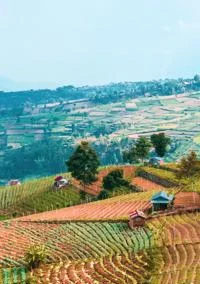
Globally the proportion of people who live in rural areas is declining, yet the net number continues to increase: from 3 billion in 1990 to 3.4 billion in 2020. In Southeast Asia, 30 million more people live and work in rural areas today than they did in 1990. Yet rural people are largely absent from public and academic discourse, out of sight and out of mind. One reason for the neglect is the stubbornly persistent transition narrative which suggests that rural populations are anachronistic: they belong to the past, and sooner or later they will move to cities and join the march of progress. In this talk, Prof TaniaLi will outline the main powers and processes at work in transforming rural Southeast Asia and draw on my ethnographic research in Indonesia to illustrate how rural people navigate their ever-changing terrain.
This event is co-hosted with the Department of Anthropology and the Department of Geography and Environment.
Monday 12 February, 12:00pm - 1:15pm
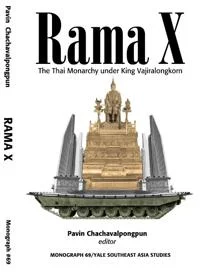
In the twilight years of King BhumibolAdulyadej(1946–2016), changes to monarchic power were already set in motion. Having been at the centre of political gravity, Bhumibolleft a vacuum of power when he died. Vajiralongkorn, enthroned in 2016, filled the vacuum with his desire to further augment the monarchic power despite his lack of moral authority and charisma. This seminar focuses on Vajiralongkorn’s attempt to strengthen his position of power by employing a different method from the one used by his father, Bhumibol.
Wednesday 7 February, 12:00pm - 1:15pm
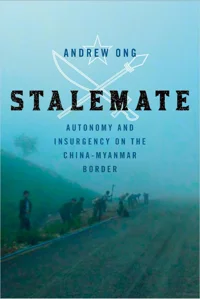
Highland autonomy is no longer about the keeping of lowland states at bay, or resisting their encroachment into the hills. It is instead a relational autonomy, maintained through the management of political ties and flows of capital and people into the hills. In the highland Wa Region of Myanmar, on the Chinese border, the 30,000-strong United Wa State Army has engaged in this careful dance for over 30 years, maintaining its autonomy from Myanmarand China. In this talk, Aexaminethe process of region-making in Wa Region: how its political visions are incongruous with the language of the modern state-form, how it makes and breaks intermittent ties with neighbouring states, and how it regulates the movement of people and capital in and through its region to ensure survival. I make some simple reflections on what the UWSA’s differing vision of autonomy might mean for Myanmarin the post-coup era.

Wednesday 31 January, 12:00pm - 1:15pm
Following Dr SebRumsby's recently published monograph, this panel will discuss and debate the contributions of Development in Spirit to understanding the possibilities for 'alternative routes to development' or empowerment amidst profound socio-economic transformations in contemporary rural Southeast Asia. Sebwill be joined by Professor Catherine Allertonand Dr HansSteinmuller to explore the marketisationof upland livelihoods, the under-appreciated role of religion in everyday politics and the influence of neoliberalgovernance in everyday lives.
Monday 29 January, 12:00pm - 1:15pm
The passing of Henry Kissingerin November 2023 precipitated an outpouring of public commentary on bombing in Cambodia in the early 1970s while he was US National Security Advisor and then Secretary of State. Public interest in bombing campaigns has been further stimulated by the recent avalanche of coverage of the effects of airstrikesby the aerial warfare branch of the Israeli Defense Forces. In both cases, much concern has centred on the resulting deaths of civilians and the extent to which these are evidence of war crimes or worse. There has also, at least sometimes, been debate about what exactly happened in specific instances and questioning about the credibility of reported death tolls. Since 2017, Dr Steve Heder has been conducting extensive new field research on the Cambodia case. Unexpectedly, the results bring into question widely held beliefs about the air war in Cambodia, while also suggesting that comparison with the Gaza case highlights how much more intensely horrific war crimes are being committed there, even while being documented in real time.

Wednesday 24 January, 12:30pm - 1:45pm
In this SEACSeminar, Prof NeilLee will present the research and findings of his SEACResearch Fund project. The project aimed to understand the development of Singapore’s digital tech sector. Between 2010 – 2023 the sector grew rapidly, with major firms developing from the country. The seminar will discuss the extent to which policy was driving this, relative to fundamentals of location, business taxation and so on, and draw out lessons for economic policymakers in other countries.

Monday 22 January, 2:15pm - 3:45pm
In the 2023 elections in Thailand, the newly formed Move Forward Party won a plurality of 151 parliamentary seats on a strongly anti-establishment campaign platform, but was thwarted from forming a government. Against this backdrop, the Saw Swee Hock Southeast Asia Centre at the LSE is hosting a conversation with ThanathornJuangroongruangkit, the former leader of Move Forward’s original incarnation, the Future Forward Party. He will be speaking with DuncanMcCargo of NanyangTechnological University (NTU) in Singapore and with PetraAlderman of the University of Birmingham, both of whom are specialists on Thai politics.

Wednesday 17 January, 12:00pm - 1:15pm
In September 1972, FerdinandMarcosdeclared martial law and imposed military dictatorship on the Philippines. In his recently published book, The Drama of Dictatorship (Cornell University Press, 2023), and in this serminar, Joseph Scalice examines the complex events leading up to the declaration and traces the political developments and social context that made martial law possible. Uncovering the central role played by two rival Communist parties and rewriting the history of the elite opponents of Marcos, particularly NinoyAquino, revealing them to be forces who, like Marcos, were plotting against democracy.

(V)
Wednesday 6 December, 12:00pm - 1:15pm
In 2024, Indonesia will hold its fifth presidential elections since democratic reform began in 1998. For the last two years, candidates have been positioning themselves to replace outgoing President JokoWidodo, who is constitutionally barred from running again. Dr MarcusMietzner (Australian National University) argued that the coalition likely to be built after the 2024 elections will be similar to previous ones - but that the political persona of the president still matters in determining the coalition's overall direction.

Wednesday 29 November
Some People Need Killing is the title of Patricia Evangelista's meticulously reported and deeply human chronicle of RodrigoDuterte's drug war. The discussion drew from Evangelista’s on-the-ground account of killings carried out by police and vigilantes. It considered the impact on survivors, the grammar of violence, and the human impulses to dominate and resist.
London Burma Reading Group
Thursday 23 November
The London Burma Reading Group hosted a networking social event, to facilitate exchange among those studying or working on Myanmar, or those whose research has implications for Myanmar. An event of exchange and conversations among students, academics, researchers, and those more generally interested in the country. Those from other universities and those beyond academia were strongly encouraged to join.
(V)
Wednesday 22 November
Nearly forty years after Hun Sen first became Prime Minister in 1985, Cambodia’s long-time ruler has passed on power to his son Hun Manet, who assumed the premiership in August 2023. Against the backdrop of this much anticipated succession, a group of the UK’s leading scholars of Cambodia discussed the implications of this pattern of dynastic succession for political continuity and change in the country.
(V)
Wednesday 15 November
Dr ArveHansen (University of Oslo) approached the dramatic changes in consumption patterns in Vietnam over the past decades, combining a focus on everyday life and large-scale development processes. The talk takes as a starting point the recently published book Consumption and Vietnam’s New Middle Classes: Societal Transformations and Everyday Life (Palgrave, 2022).

(V)
Wednesday 8 November
Over the past twenty years, increasing attention – and alarm – has been focused on Chinese assertiveness and aggression in the South China Sea and in the territorial waters of the Philippines in particular, provoking diplomatic and military responses from the Philippines and the United States and rendering the country a ‘front-line state’ in the ongoing ‘new cold war’ between the two global superpowers. In this seminar, SEACDirector Prof John Sidelshowed how competition between the US, Japan, and China over telecommunications and transportation infrastructure has unfolded and escalated over the past twenty years in the Philippines and other countries in Southeast Asia.

(V)
Wednesday 1 November
Dr ElliottPrasse-Freeman (National University of Singapore) discussed how for decades, the outside world mostly knew Myanmaras the site of a valiant human rights struggle against an oppressive military regime, predominantly through the figure of Nobel Peace Prize winner AungSan SuuKyi. And yet, a closer look at Burmese grassroots sentiments reveals a significant schism between elite human rights cosmopolitans and subaltern Burmese subjects maneuvering under brutal and negligent governance.

Wednesday 25 October
Why do authoritarian nations brand themselves? And how do they understand and use this practice? In her new book, Dr PetraAlderman (University of Birmingham) offers a novel approach to the study of nation branding as a strategy for political legitimation in authoritarian regimes using the example of military-ruled Thailand. This talk discussed how Thailand’s military junta, the National Council for Peace and Order (2014-2019), sought to nation branding to shape the social attitudes and behaviours of Thai citizens during the almost 5 years of direct military rule.
(V)
Thursday 19 October
A good deal has been written about the ‘puzzling’ persistence of the smallholder in Southeast Asia, and more widely across Asia. Explanations have ranged from the agroecologyof wet rice to the precaritiesof late capitalism. In this lecture, Prof Jonathan Rigg(Bristol University) considered the ‘social’ factors and conditions of smallholding lives and livelihoods which are brought to the centre of the explanation. Drawing on field research in Laos, Thailand and Vietnam, as well as in Nepal, the lecture sought to ‘render social’ the Southeast Asian smallholder.

(V)
Wednesday 11 October
Despite its relatively small market, Malaysia has emerged as the centerof the global Islamic financial economy. In this lecture, Prof JessiePoon(University of Buffalo (SUNY)) examined firstly Malaysia’s emergence in Islamic finance in terms of its frontier positioning between the knowledge systems of the West and Middle East. And, secondly how mediation has been accompanied by a project of juridical market-making.
This event was co-hosted with the Department of Geography and Environment.
(V)
Wednesday 4 October
Commodity booms often prompt more nationalist policy styles in resource-rich countries. Usually, this nationalist push weakens once a boom is over. But in Indonesia, a major global exporter of coal, palm oil, copper, gold, and other minerals, the intensity of nationalist policy interventions increased after the early twenty-first-century commodity boom came to an end. In this seminar, based on her forthcoming book, Eve Warburton (Australian National University) explainedthese trends by examining the economic and political benefits that accrue to domestic business actors when commodity prices soar.
(V)
Wednesday 27 September
Men and women do not experience war, violence, and peace in the same ways. Accordingly, peacebuildinginterventions now incorporate "gender mainstreaming" and stand-alone "gender-and-development" programming. These gender interventions should make peacebuildingmore effective and sustainable, facilitating stable societies and efficient economies, but results have been mixed. In this seminar, Dr Melissa Johnston (University of Queensland) explored outcomes for people on the ground in the instructive case of Timor-Leste.
This event was co-hosted with the Department of Gender Studies.
(V)
Wednesday 14 June, 12:00pm to 1:15pm
Singapore has retained its longstanding identity as a gateway to Asia through various moves to diversify its economy. Evolving from a colonial port city into a shipping and transportation hub, the country also initiated massive infrastructuralinvestments to support emerging sectors in financial services, petrochemical refining, telecommunications, marketing, and e-commerce. Prof Gerald Sim(Florida Atlantic University) discussed the city-state’s concerted strategy to position itself as an infrastructuralhub in global supply chains, Singapore’s national cinema of the last decade has reified deeply felt social effects resulting from those decisions.

t (V)
Thursday 8 June, 12:00pm to 1:15pm
Royal cities in Southeast Asia are usually characterised as having certain layout such as mandalaand axis. The layout is usually supported by narratives claimed to be ‘cosmological’. While the claim of cosmology is debatable, the inherited layout somehow can be optimised for contemporary development. Dr OfitaPurwani(Universitas SebelasMaret, SEACVisiting Fellow) discussed the case of Yogyakartaas a Javanese royal city which is under a massive development at present.
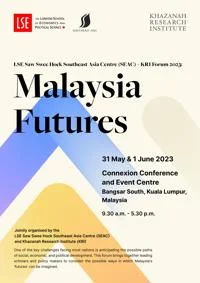
31 May - 1 June 2023
One of the key challenges facing most nations is anticipating the possible paths of social, economic, and political development. This forum, jointly organised by SEACand the KhazanahResearch Institute (KRI), bring together leading scholars and policy makeesto consider the possible ways in which Malaysia's 'futures' can be imagined.

(V)
Wednesday 31 May, 12:00pm to 1:15pm
Written during an internationalised peace process that saw the country administered by a United Nations Transitional Authority for 18 months, Cambodia’s 1993 Constitution is ostensibly guided by principles of liberal democracy and rule of law. Yet, even before a recent trend of (re-)autocratisationsaw Cambodia shift from a "competitive" to a "hegemonic" model of authoritarianism, constitutional contestation was often assumed to be "muted," with the document itself routinely dismissed a "façade" or a "sham." This book-project presented by Dr Ben Lawrence (National University of Singapore, SEACVisiting Fellow) highlighted the extent to which opposition political figures, Buddhist monks, social movements, NGOs, community groups, artists and other laypeoplein Cambodia mobilise constitutional ideas and reshape constitutional meaning "from below."

(V)
Monday 22 May, 4:00pm to 5:15pm
Planners often characterizethe land regime in the city of Saigon as a form of "backward planning," a transgressive form of planning that involves a seemingly irregular orientation to time and the planning archive. It occurs in its most brazen form when municipalities change or erase parts of the land archive or alter ratified planning documents from the past. Dr Hun Kim(University of California, Irvine) discussed how these practices can rearrange property relations, possession and ownership in the present and future.

Wednesday 17 May, 12:00pm to 1:15pm
In the process of multiple transformations, the Border Patrol Police of Thailand (BPP) has become a symbolic missionary of royalist nationalism that safeguards the border of Thainess. Prof SinaeHyun(SogangUniversity) discussed how the BPP’s transformations and evolving missions vividly show how the Thai ruling elite indigenizedthe American Cold War crusade in Southeast Asia to build a royalist Thai nation in the second half of the twentieth century.
Southeast Asia Forum 2023: Southeast Asia Futures (V)
Tuesday 9 - Friday 12 May
How do past and current trends inform the future of Southeast Asia? What can we learn from Political, Economic, and Urban approaches about how Southeast Asia is changing? In 2023 the Southeast Asia Forum will focus on Southeast Asia Futures, considering the questions from a variety of approaches and lenses. The events will offer a unique opportunity to learn from cutting-edge research and gain insight from experts working in and on Southeast Asia. The week will also include several events for Early Career Researchers focused on sharing experiences to help shape future research in the region.

(V)
Wednesday 3 May, 12:00pm to 1:15pm
Known as the ‘master of Philippine sunlight,’ FernandoAmorsolois the painter most associated with the Philippine landscape and Philippine pastoral, bringing to both a decided innocence, if not sunlit grace. More than merely formal experimentation with light, however, Amorsolois canonical because of the distinctly national-pastoral conceptions his work elaborates. This talk by Dr NicoleCuUnjiengAboitiz(SEACVisiting Fellow, Cambridge University) analyzedthe relationship between the elite class and nature through close analysis of Amorsolo’s landscape and genre painting.

(V)
Tuesday 4 April, 4:00pm to 5:15pm
Prof HelgaLeitnerand Prof Eric Sheppard(UCLA) will consider how speculation on land and property has created an affordable housing crisis in cities across the globe. This reflects the broader global capitalist conjuncture, with money capital switching from commodity production to speculation and rentiership. Yet speculation is also socio-cultural; it is shot through with emotional and socio- cultural values that mobilizea future imaginary. Jakarta occupies a particular socio-spatial positionalitywithin this context; that of a southern megalopolis. This event will take place online via Zoom.

(V)
Wednesday 29 March, 9:30am to 10:45am
Dr GerardMcCarthy (SEACVisiting Fellow in 2022) discussed his recent book Outsourcingthe Polity: Non-State Welfare, Inequality, and Resistance in Myanmar and his work examining how ideals and practices of non-state welfare can both sustain democratic resistance and undermine social reform over time.
(V)
Thursday 23 March, 11:30am to 12:45pm
During the past decade, countless mass youth street protests campaigned for democracy, environmental protection, equality and social justice in country after country across the globe. SEACVisiting Fellow, Dr KanokratLertchoosakul(ChulalongkornUniversity) highlighted the youth movement in Thailand between 2019 and 2021.

(V)
Wednesday 8 March, 12:00pm to 1:15pm
SEACVisiting Fellow, Dr Helena Varkkey(UniversitiMalaya) explored the idea of how seasonality affects social resilience and shapes mitigative actions in relation to haze.

(V)
Friday 3 March, 10:30am to 11:45am
Dr KristianKarloSaguin(University of the Philippines Diliman) examined urbanizationas a frontier-making process through the example of Metro Manila in the Philippines and its convenient resource frontier, Laguna Lake. Guided by an urban political ecological understanding of urban metabolism, Dr Saguintracked two particular resource flows with particular resonance for Manila’s twentieth century urban environmental trajectory – fish and floodwaters. Making visible the constellation of actors, practices, desires and materialities brought together to deliver vital resource flows for the city underscores the shifting assemblages and politics that sustain life in the city and produce imaginariesof possible urban futures. This event took place online via Zoom.

(V)
Wednesday 8 February, 12:00pm to 1:15pm
How is a transnational workforce reproduced? In this seminar SEACVisiting Senior Fellow, Dr Andy Scott Chang(Singapore Management University) argued that international staffing agencies play a midwifery role in the governance of guest workers, ensuring the replenishment of a flexible and malleable laborsupply.
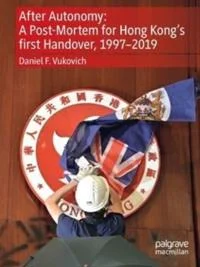
(V)
Monday 30 January, 12:00pm to 1:30pm
In this roundtable, Dr Daniel Vukovich's recent publication After Autonomy: A Post-Mortem for Hong Kong’s first Handover, 1997–2019 was discussed.
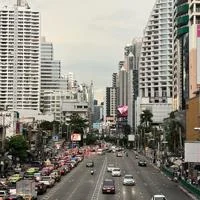
(V)
Wednesday 25 January, 12:00pm to 1:15pm
Dr NapongTao Rugkhapan (ChulalongkornUniversity) reflected on the phenomenon of gentrification in Bangkok, Thailand. Drawing upon recent developments in comparative urban theory, postcolonialtheory, and comparative gentrification studies, the seminar wrestled with the productive absence of the term 'gentrification' in Thai(land). The linguistic vacuum has allowed local actors to differently define the English term to suit their agendas. The local renditions range from literal translations to awkward mouthfuls to hopeful urban reimaginations. The multivocalitygoes to affirm not only the complexity of gentrification, but also the broader politics of competing local claims to land.

(V)
Wednesday 18 January, 12:00pm to 1:15pm
With rapid and compressed development and urbanisation, emerging cities in the Global South face challenges similar to those of the Global North, such as increased inequality, informalisation, and diversified needs for social safety nets. SEACVisiting Professor, TamakiEndo(SaitamaUniversity) explored the characteristics and complexities of the urban well-being of the lower and middle classes in Asian megacities. Risk responses are a critical determinant of individual well-being in times of increasing uncertainty.

NARRATING DEMOCRACY: Peoples & Futures of Myanmar
Wednesday 23 November, 3:30pm
A panel discussion on the futures of democracy in Myanmar, focused on the recently published 'Narrating Democracy in Myanmar: The Struggle between Activists, Democratic Leaders and Aid Workers' (2021).
This event was in collaboration with the
(V)
Wednesday 23 November, 12:00pm to 1:15pm
SEACVisiting Senior Fellow, Professor JulioTeehankee(Professor of Political Science and International Studies, De La SalleUniversity) considered: the factors that contributed to the erosion of the post-Marcosliberal reformist political order; how the Marcosdynasty succeeded in staging their political comeback; and what the prospects are for Philippine democracy under a restored Marcospresidency.
'Thinking about democracy in Singapore' Student Masterclasswith Prof Beng HuatChua
Thursday 17 November, 11:30am to 12:30pm
Following his lecture on Wednesday 16 November, Prof Chuamet with Students for a masterclassto discuss 'Thinking about democracy in Singapore'.

(V)
Wednesday 16 November, 5:00pm to 6:30pm
SEAChosted Advisory Board member, Professor Beng HuatChua(National University of Singapore) who discussed Singapore's national housing programme, the way in which it is influenced by private captial, and its socio-economic and political outcomes.

Thursday 10 November, 09:00am - 10:30am
Justice After Carbon explored the current and potential impact of the Chinese Hydropower Industry on the riverine communities of South-East Asia. This virtual workshop was chaired by Dr AndreaPia(Dept of Anthropology, LSE)

Interconnected Worlds: electronics global production networks after the pandemic (V)
Wednesday 09 November, 5:00pm to 6:30pm
Professor Henry Yeungdiscussed his recent monograph Interconnected Worlds, exploring how electronics global production networks have evolved since 2018. The talk was chaired by Prof. HyunBang Shin (Professor of Geography and Urban Studies; Director LSE SEAC).
This event was co-hosted with the Department of Geography and Environment.

(V)
Wednesday 9 November, 12:00pm to 1:15pm
The Philippines is a global pioneer in institutionalising anti-trafficking measures to protect its citizens, which makes it a crucial case study for understanding the impact of anti-trafficking policies on vulnerable populations. Dr SharmilaParmanad(Gender and Human Rights Teaching Fellow, LSE) repositioned anti-trafficking as an ambivalent practice rather than an uncomplicated human rights victory.

(V)
Thursday 3 November, 5:00pm to 8:00pm
This hybrid public event marked the occasion of IJURR's editorial board meeting in London, which was occasion for board members to engage with readers and potential authors and also showcase some of the on-going dialogues at IJURR. This event was organised in collaboration with the International Journal of Urban and Regional Research.
Urban Salon: Gentrification and Public Policy: Comparative Perspectives (V)
Tuesday 1 November, 5:00pm to 6:30pm
This event marked the launch of the latest book in the IJURR Studies in Urban and Social Change Book Series: The CommodificationGap: Gentrification and Public Policy in London, Berlin and St. Petersburg by MatthiasBernt. The event included reflections on the book from the author and discussions by experts in the field of housing, gentrification and social change.
This event was hosted in collaboration with the Urban Salon and the Department of Geography and Environment.

(V)
Wednesday 26 October, 12:15pm to 1:30pm
How does state-sponsored violence induce democratic erosion? Populist strongmen often prompt the concern of democratic backsliding, as their actions may undermine constitutional limits as a bulwark against authoritarianism. SEAChosted Dr. Sol Iglesias (University of the Philippines), and Dr. Chao-Yo Cheng(BirkbeckUniversity of London) who explored whether the observed immense popularity for both Duterteand his "war on drugs" campaign is systematically inflated because of these subjects’ potential sensitivity. The talk was chaired by Prof. John Sidel(Sir Patrick GillamProfessor of International and Comparative Politics).
Tuesday 18 October, 9:30am to 12:45pm
Comprised of two hybrid panels (in-person and live-streamed), this workshop brought together scholars from across disciplines and regions to survey the evolving political and governance context surrounding the gig-economy. Examining the experience of Southeast Asia in comparative perspective, the workshop seeks to theorise how state-business-labour relations, welfare regimes and existing governance approaches are evolving in response to the rapid and recent rise of platform capitalism. The workshop is chaired by Dr. GerardMcCarthy (Visiting Fellow LSE SEAC).
(V)
Wednesday 12 October, 12:00pm to 1:15pm
In August 2019, Indonesian President JokoWidodoannounced the plan to build a new capital called Nusantara. His ambition is to relocate the capital from Jakarta to a new location by the end of his presidential term in 2024. SEAChosts Visiting Fellow, Dr SulfikarAmir(NanyangTechnological University) critically examined Indonesia’s ambition to build Nusantarawithin a short time. The talk was chaired by Prof. HyunBang Shin (Professor of Geography and Urban Studies; Director LSE SEAC).

(V)
Wednesday 5 October, 11:00am to 12:15pm
SEAChosted Dr QingfeiYin (Assistant Professor of International History and SEACAssociate, LSE) who explored China’s interactions with other Asian powers regarding the settlement of Cambodian issue from the 1980s to the early 1990s and examined how the Cambodian crisis shaped China’s policy toward Southeast Asia.

(V)
Monday 3 October, 4:00pm to 5:30pm
In this webinarwe introduced the Environment and Planning A Special Issue exploring the geographies of the new state capitalism through a roundtablediscussion with the SI editors Adam Dixon, IliasAlami, Heather Whitesideand JamiePeck. This webinarwas chaired by Prof. HyunBang Shin (Professor of Geography and Urban Studies; Director LSE SEAC).

Wednesday 28 September, 12:00pm to 1:30pm
Southeast Asia focused Early Career Researchers were invited to discuss opportunities in the Asia region with SEACVisiting Fellow, Dr LinHongxuanwho discussed opportunities for Southeast Asianists. The talk was chaired by Prof. HyunBang Shin, took place in a hybrid format, and was followed by networking for those attending in person.

Southeast Asian Waters Series
In the 2021-2022 Academic Year, SEACintroduced a seminar series on Southeast Asian Waters featuring the latest research by experts across the world and convened by Professor John Sidel(SEACAssociate) and Professor HyunBang Shin (SEACDirector). Full details including links to the seminars can be .

(V)
Wednesday 22 June 2022, 12:00pm to 1:30pm
The act of counter-mapping by local people as everyday resistance and solidarity has the idea of expanding the perspective of seeing. This panel invited three collectives from Surabaya, KualaLumpurand QuezonCity to discuss their respective practices in counter-mapping.
Speakers: AnithaSilvia(BAK Fellowship for Situated Practice 2021/2022, Pertigaan), CelceaTifani(Communication Designer, Pertigaan), and ZikriRahman(LiteraCity).
Chair: Prof. HyunBang Shin (Director, LSE SEAC)

(V)
Dr. EvanA. Laksmana (Senior Research Fellow, Centre on Asia and Globalisation, Lee KuanYew School of Public Policy, NUS) and Prof. TerenceLee (Associate Professor, Department of Political Science, NUS) spoke on the organisational features and behaviours of the Indonesian military beyond civil-military relations. The talk was chaired by Prof. HyunBang Shin (Director, LSE SEAC)

(V)
As part of the SEACSoutheast Asian Waters Seminar series Dr. DannyMarks (Assistant Professor in Environmental Policy and Politics, Dublin City University) spoke on flooding in Jakarta and the social and political causes of these disasters. The talk was chaired by Prof. HyunBang Shin.

(V)
Against the backdrop of the final days of the Dutertepresidency and the recent election of Ferdinand"Bongbong" Marcos, Jr. in the Philippines, Professor VicenteL. Rafael (Professor of History and Southeast Asian Studies at the University of Washington in Seattle) examined the colonial roots of elections in the organizationof native collaboration and counterinsurgency under Spain and the US. The talk concluded with a look at contemporary practices today and the results of the 2022 presidential elections. This event was chaired by Prof. John Sidel.

(V)
As part of the SEACSoutheast Asian Waters Seminar series Dr. VanessaLamb (Senior Lecturer, School of Geography, University of Melbourne) spoke on sand extraction and its consequences in Southeast Asia. The talk was chaired by Prof John Sidel.

(V)
EngNetraand NhimTumfrom Cambodia Development Resource Institute (CDRI) and SabinaLawreniukdiscussed their experience of doing research in Cambodia.

(V)
LinHongxuanspoke on the Socialist ideas of prominent Muslim intellectuals in Indonesia during the 1950's. The talk was chaired by Prof. John Sidel.

(V)
SEAC hosted this talk focusing on decolonisation in Singapore during the 1957 Influenza epidemic.

(V)
As part of the SEACSoutheast Asian Waters Seminar series Bill Hayton(Associate Fellow, Chatham House) spoke on Vietnam and the South China Sea. The talk was chaired by Prof. John Sidel.

(V)
As part of the SEAC Southeast Asian Waters Seminar series Dr. Kian Goh (Assistant Professor of Urban Planning, UCLA) spoke on Jakarta's urban waterscapes and climate change.

(V)
Wednesday 9 March 2022, 12:00-1:30pm
SEAC hosted this talk focusing on community-led development in Southeast Asia.

(V)
SEAC hosted this talk focusing on Fintech in Southeast Asia.

COVID-19 in Southeast Asia: insights for a post-pandemic world (V)
SEAC hosted this book launch with discussion from some of the contributing authors to the edited volume on insights for a post-pandemic world.

(V)
SEAC hosted this discussion on the impact of China's Belt and Road Initiative on the Southeast Asia region.

(V)
SEAC hosted this talk by Dr. Joseph Scalice (SEAC Visting Fellow) on the Sino-Soviet Split in the Philippines.
(V)
SEAC hosted a two-day online workshop concluding the British Academy project led by three investigators located in China, Malaysia and the United Kingdom.

(V)
SEAC hosted this talk by Dr. Junjia Ye on migration diversity and belonging in east Singapore.
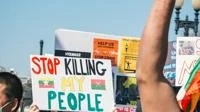
Critical Voices from Myanmar: Contexts and Concerns after the 2021 coup d'état
SEAC hosted a roundtable discussion to reflect on the current situation in Myanmar and its future, listening to the voices from Myanmar.

(V)
SEAC hosted this round table discussion, focused on community practice and heritage, in collaboration with the Bartlett Development Planning Unit (DPU) at UCL and the Urban Salon.
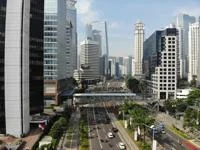
(V)
As part of the SEACSoutheast Asian Waters Seminar series Dr. Emma Colven spoke on Jakarta's water crisis and property development.

(V)
As part of the SEACSoutheast Asian Waters Seminar series Prof. Eric Tagliacozzo spoke on different technologies and connections to imperialism in maritime Asia.
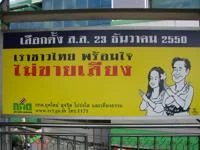
(V)
SEAC hosted this workshop with the Nordic Institute of Asian Studies (NIAS) on Southeast Asian electoral management in comparative perspective.

(V)
This Southeast Asia Forum event showcased some of the on-going work of PhD researchers at LSE, covering society and economy in Southeast Asia.

(V)
In this Southeast Asia Forum event, project leaders and associated (undergraduate) research fellows presented their (preliminary) findings about work, life and migration in the COVID-19 era.

The Role of Philanthropy in a New Social Contract (V)
This Southeast Asia Forum event reflected on the impact of the late Professor Saw’s philanthropy at LSE.
A video recording of this event is available here.
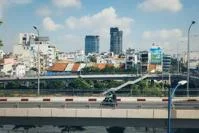
(V)
As part of the Southeast Asia Forum, SEAChosted a roundtablediscussion which featured emerging scholars whose work engages with urbanising sites across Southeast Asia and beyond.
(V)
This SEAF event showcased two presentations from awardees of the SEACResearch Fund, who discussed some preliminary findings regarding a) the emerging social construction of the 'haze season' in Singapore and b) professional intermediaries as the accomplices of kleptocraticelites. More information on the Research Fund scheme can be found here.

(V)
SEAC hosted the book launch for this new title by SEAC Associate Prof. John Sidel. The event included a roundtable discussion of the work and its themes with three invited speakers.

(V)
This Urban Studies Foundation International Workshop featured five presentations on the production of urban space in the Global South, which involves a web of complex relationships between state and non-state actors.
(V)
This SEAC Seminar on 6th October focused on the work of our Senior Visiting Fellow Dr. Shanthim Thambiah, who spoke about Indonesia and Malaysia, discussing how national emo-scapes influence the cultural and political interpretation of the issues faced by migrant domestic workers.

Digital Interventions on Urban Societal Challenges in Southeast Asian Communities (V)
On 16 June, SEAC invited Visiting Senior Fellow Dr Joanne Lim(Associate Professor in Communications, Media and Cultural Studies at the University of Nottingham in Malaysia) to present her research study which considers using the digital as a tool to increase social interaction/connectedness, and to reinforce the development of culture, creativity and wellness. Further details can be found here.
Digital Interventions: Author meets ECRs
On 16 June following the SEAC Seminar, Dr Joanne Lim hosted a 45 minute informal session, specifically for current PhD students. This was a small group discussion around methods, career path, and other topics ECRs would like to discuss.
On 27 May the South Asia Centre, in collaboration with SEAC, hosted a panel discussion with academics and activists on the military coup in Myanmar in February 2021 overturning the results of the recent elections, thus jeopardising the future of democracy in the country. The event was chaired by Nilanjan Sarkar, Deputy Director of the South Asia Centre, and featured speakers including David Brenner(Lecturer, University of Sussex), Ma Htike (QMUL), Hnin Pwint Thon (The Burma Campaign UK), Sawangwongse Yanghwe, and Dominique Dillabough-Lefebvre (LSE). Further details can be found .
(V)
From Thursday 20 May to Wednesday 26 May in partnership with ASEAS (UK), SEAChosted a week-long Digital Summer School especially designed to support Early Career Researchers with insights, networking, and support as they begin their academic careers. It took place over three days (Thursday 20, Monday 24, and Wednesday 26 May) from 12-3.15pm BST each day, and featured 6 sessions covering a wide range of topics such as: succeeding in publishing; decolonising research; and post-academic and alt-academic career paths; alongside a networking event for ASEAS (UK) and SEAC’s ECR Network members. Further details can be found .

Land, Ladies, and the Law: Author meets ECRs
On 13 May following the SEAC Seminar, Dr Thanyaporn Chankrajang hosted an informal session, specifically for current PhD students. This small group discussion covered topics including archival research, teaching and research in Thailand, and conceptualising research projects.
(V)
On 13 May, SEAC invited Dr Thanyaporn Chankrajang (Associate Professor in Economics at Chulalongkorn University, Thailand) to present her research study which evaluates women’s de jure and de facto land rights and its implications for household welfare in nineteenth-century Bangkok. Further details can be found .
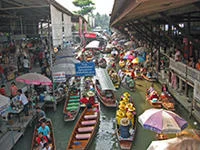
(V)
On 31st March 2021, SEAC invited Dr Tamaki Endo, SEACVisiting Senior Fellow (Associate Professor in Development Economics, Saitama University, Japan), to discuss her paper which analyzes the recent complex dynamics of exclusion and inclusion of ‘informality’ of the city. Further details can be found .
(V)
On 24th March 2021, SEACinvited two early career researchers, Dr Michael IntalMagcamit(Queen Mary University of London) and Dr HongxuanLin(National University of Singapore), working on political economy and religious politics in the region to present their latest research projects. This event was chaired by SEACAssociate Prof. John Sidel. Further details can be found .
Getting Developing Asia Back on Track (V)
On 18th March 2021, MasatsuguAsakawa, the President of the Asian Development Bank and the Chairperson of ADB’s Board of Directors, spoke at a SEACand LSE Public Event. His talk focused on ADB's success and current efforts to help its developing members toward the path of resilient and sustainable recovery from the COVID-19 pandemic. Further details can be found here.
SEACLecture: Spatial Politics and Transient Migrant Workers in Global-City Singapore (V)
On 9th March 2021, SEACinvited Prof. Brenda Yeoh(Raffles Professor of Social Sciences, National University of Singapore) for SEACLecture, focusing on the context of Singapore as a globalising city-state where over a million low-waged transient migrant workers live and work. Further details can be found here.
LSE Festival: Shaping the Post-COVIDWorld - Life in a Post-COVIDWorld: Learning from Southeast Asia (V)
On 1st March 2021, leading thinkers on Southeast Asia reflected on the lessons of COVID-19 for connectivity, governance, and urbanisation in the region and assess the futures it might foretell for Southeast Asia and the world. This event is part of the . Further details can be found here.
On 25th February 2021, SEAC co-organised an event that engaged with de-centring knowledge production and 'theorising' urban studies from China/Asia as critical urban scholarship. Further details can be found .

On 10th February 2021, SEAC hosted a Book Launch for the 2020 book 'Thinking and Working Politically in Development: Coalitions for Change in the Philippines', written by SEAC Associate Prof. John Sidel (Sir Patrick Gillam Professor of International and Comparative Politics at LSE) and JaimeFaustino(The Asia Foundation). Further details can be found .
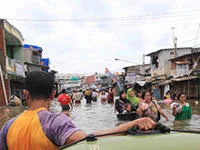
(V)
On 27th January 2021, SEAC invited Prof. Gavin Shatkin (Professor at the School of Public Policy and Urban Affairs, and the School of Architecture, at Northeastern University) for his talk titled 'Flooding and the Politics of Property Rights in Jakarta'. Further details can be found .

On 20th January 2021, SEAChosted a Book Launch for the 2020 book 'Home SOS: Gender, Violence and Survival in Crisis Ordinary Cambodia', written by SEACAssociate Prof. Katherine Brickell(Royal Holloway, Univeristyof London). Further details can be found .
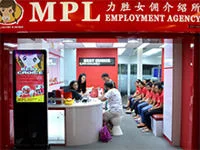
On 9th December 2020, Dr Laura Antona (ESRC Research Fellow, University of Oxford) was invited to speak on how employment agencies in Singapore commodify and sell domestic labourers, shaping their relationships with their employers and the spaces in which they live and work: namely, the home space. Further details can be found .
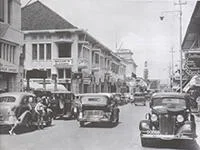
(V)
On 25th November 2020, SEAC hosted a roundtable discussion aiming to promote a better understanding of postcolonial urban histories in Southeast Asia while seeking an opportunity to locate them in different disciplines including urban history and urban studies. Further details can be found .

(V)
On 17th November 2020, Dr Jayde Lin Roberts (Senior Lecturer in Built Environment, University of New South Wales) led a research seminar focusing on street vending as an integral part of Yangon’s urbanism. Further details can be found .

On 13th November 2020, Dr Rita Padawangi(Senior Lecturer at Singapore University of Social Sciences) followed up her talk on 11th November by undertaking a research master classfor PhD students and early career researchers. The master class focused on doing research under the pandemic based on Dr Padawangi's research experiences. Further details can be found .
(V)
On 11th November 2020, Dr Rita Padawangi (Senior Lecturer, Singapore University of Social Sciences) delivered a research seminar bringing together the urban experience from city neighbourhoods to connect with theorising the city in and from Southeast Asia. Further details can be found .
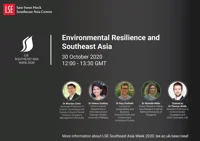
On 30th October 2020, for the last event of LSE Southeast Asia Week 2020, SEACinvited four speakers to explore the extent to which the environment shapes and defines the region, and the role that environmental resilience must play over the coming decades. Further details can be found .

On 29th October 2020, SEAChosted a roundtablepanel discussion by inviting four academics whose work had been related to the urbanising region's development challenges. The event focused on politics of city-making and re-making in Southeast Asia, with cases coming from Indonesia, Laos, Malaysia and the Philippines. Further details can be found .

On 28th October 2020, SEAC, in collaboration with ASEAS UK, hosted a roundtablepanel discussion. The event invited selected directors of global centres on Southeast Asia to discuss the future of Southeast Asian Studies and challenges in the midst of COVID-19 generated ‘new normal’. Further details can be found .
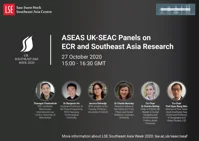
On 27th October 2020, SEACand ASEAS UK invited early career researchers to identify the various challenges ECRsface during this difficult time of pandemic. The discussions on the day fedinto the roundtablediscussion with Centre Directors on the following day for them to respond to such concerns. Further details can be found .

On 27th October 2020, SEACinvited three academics working on diverse issues related to migration and mobility, and discussed how the COVID-19 pandemic had affected the mobility and immobility of migrant workers and students among others. Further details can be found .

On 26th October 2020, for the first event of LSE Southeast Asia Week 2020, SEACinvited regional experts to discuss the impacts of COVID-19 on regional politics and economic performance in Southeast Asia, and how these were entwined with health concerns. Further details can be found .

COVID-19 and Southeast Asia WebinarSeries (V)
On 19th and 21st October 2020, SEAChosted two seminars under the themes of 'Marginalised and Vulnerable Groups and Strategies for Mutual Support During Covid-19' (19 Oct) and 'The Experiences of Southeast Asia’s Migrant Workers, Asylum Seekers, and Refugees During Covid-19' (21 Oct) with contributors for SEAC's research project 'COVID-19 and Southeast Asia'.

Masterclass: Mapping Transdisciplinary Data for Spatial Justice
On 16th Ocotober 2020, Dr AnnetteM. Kim(Associate Professor, Sol Price School of Public Policy, University of Southern California) followed up her talk on 7th October by undertaking a research master classfor PhD students and early career researchers.
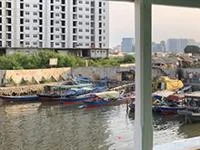
On 14th October 2020, Dr Emma Colven (Assistant Professor of Global Environment, University of Oklahoma) led a research seminar, speaking on the topic of Jakarta's "water crisis" in relation to its temporalities and spatialities. Further details can be found .

On 9th October, 2020, SEACco-hosted an event with to discuss the diverse views regarding state-society relations in Myanmar. Check the details of the event here.
On 7th October 2020, Dr Annette M. Kim (Associate Professor, Sol Price School of Public Policy, University of Southern California) led a research seminar on the subject of public space transformations in Ho Chi Minh City, Vietnam. Further details can be found .

On 30th September 2020, SEAC hosted an online roundtable discussion themed around 'decolonising higher education' in relation to the Southeast Asian region and beyond. This roundtable invited three speakers whose research is rooted in such effort of decolonising higher education, addressing the structural power inequalities of knowledge production. Further details can be found .
Post COVID-19 Futures of the Urbanising World (V)
On 3 June 2020, Dr Creighton Connolly (Senior Lecturer, University of Lincoln), Prof Roger Keil (Professor, York University, Toronto), Dr Deirdre McKay (Reader, Keele University, and Chair of ASEAS UK), and Dr Rita Padawangi (Senior Lecturer, Singapore University of Social Sciences) discussed the impact of COVID-19 on changing relationships between cities and their hinterlands in global urbanisation processes. The event was part of LSE's online public event series, "COVID-19: The Policy Response" and was chaired by SEACDirector Prof HyunBang Shin. More information can be found here.
Public Lecture: "Diminishing Globalisation, Rising Digitalisation : Central Bank Policy Responses" (P)
On 10th February 2020, SEAC hosted a Public Lecture by Dr. Perry Warjiyo, Governor of Bank Indonesia, Indonesia's Central Bank, chaired by SEACDirector Prof. HyunBang Shin, on the topic of contemporary central bank policy responses to diminishing globalisation and rising digitalisation. Further details can be found .
Public Lecture: Less Poverty, More Precarity: Squaring the Circle of Southeast Asian Development (P)
On 30th January 2020, Professor Jonathan Rigg (Chair in Human Geography at the School of Geographical Sciences, University of Bristol) held a public lecture on the different, but intertwined, narratives that paint Southeast Asia as exemplar of development success and deepening inequality. This event was co-hosted with the LSE Department of Geography and Environment and chaired by SEACDirector Prof. HyunBang Shin. Further details including the podcastcan be found .
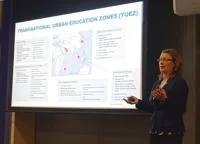
Southeast Asia Discussion Series: Enclave Urbanism and Transnational Zones in Southeast Asia (P)
On 28th January 2020, SEAC hosted its first Lent term event with Dr. Jana M. Kleibert (Acting Head of Department, Leibniz Institute for Research on Society and Space and Humboldt University of Berlin), who spoke on enclave urbanism and transnational zones in Southeast Asia. Further details can be found .
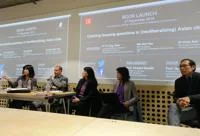
Book Launch: "Neoliberal Urbanism, Contested Cities and Housing in Asia"
On 3rd December 2019, SEAC, along with the Department of Geography and Environment, co-hosted the book launch for the 2019 book "NeoliberalUrbanism, Contested Cities and Housing in Asia". The event was chaired by SEAC Director Prof. Hyun Bang Shin, and Co-Editor Dr. Yi Ling Chen (Assistant Professor of Global and Area Studies and Geography, University of Colorado Boulder) and other contributors presented their insights on Vietnam, Taiwan and Korea. Further details can be found .
SEAC Masterclass: Research as part of democratization and urban transformation
On 2nd December 2019, SEAchosted its second research masterclassof the academic year with Dr Yi-Ling Chen (University of Wyoming), who gave insights and advice to students on conducting academic research in collaboration with civil society and activist organisations. Further details can be found .
Public Lecture: Who is the Middle Class, and what are they up to? Reflections from Jakarta (P)
On 28th November 2019, Professor Abdou Maliq Simone (Senior Professorial Fellow, Urban Institute, University of Sheffield and Honorary Professor of Urban Studies, University of Cape Town) spoke on the making of an urban middle class across Southeast Asia. Further details including the podcast can be found .
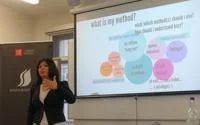
SEAC Masterclass: Researching Digital Media
On 25th November 2019, SEAC hosted its first research master classof the year led by SEACSenior Visiting Fellow Dr Merlyna Lim (Associate Professor and Canada Research Chair in Digital Media and Global Network Society, CarletonUniversity) and Chaired by Dr Bingchun Meng (Associate Professor and Deputy Head, Department of Media and Communications, LSE), on the topic of researching digital media. Further details can be found
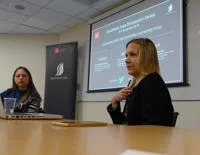
Southeast Asia Discussion Series: Civil society elites and Cambodian civil society today
On 21st November 2019, Dr. Astrid Norén-Nilsson (Associate Senior Lecturer at the Centre for East and South-East Asian Studies, LundUniversity) spoke on processes of elite formation within Cambodian civil society today as well as patterns of interaction between civil society elites and other elites, building on ongoing research for a comparative project on civil society elites in Cambodia and Indonesia. Further details can be found
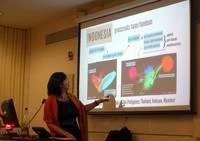
Southeast Asia Discussion Series: Social Media and Politics in Southeast Asia (P)
On 7th November 2019, SEAC hosted a . The guest speaker was Dr Merlyna Lim (Associate Professor and Canada Research Chair in Digital Media and Global Network Society, Carleton University and Senior Visiting Fellow, SEAC), and the event was chaired by SEAC Director Prof Hyun Bang Shin.
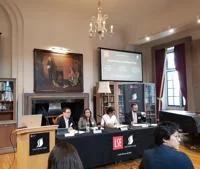
LSE SouthestAsia Forum 2019 (P)
On 29th October, SEAC hosted its in the LSE Shaw Library, which on the key research themes of SEAC while engaging with contemporary affairs in Southeast Asia.
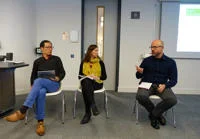
Southeast Asia Discussion Series: Land sharing experiences in Thailand and Cambodia: What lessons for land and housing policy for the urban poor? (P)
On 17th October 2019, SEAC hosted the first of the academic year, with guest speaker Dr. Paul Rabé (Senior Expert, Urban Land Governance, IHS and coordinator of the Urban Knowledge Network Asia (UKNA), International Institute for Asian Studies) who spoke on the topic of land sharing in Cambodia and Thailand. The event was chaired by SEACDirector Prof HyunBang Shin. This event is available to listen to as a podcast.

South-South itineraries: alternative routes for mutual learning between Latin America and Southeast Asia (P)
On 1st October 2019, SEAC hosted an as part of Decolonising the LSE Week, bringing together scholars from Latin America and Southeast Asia whose research is rooted in such effort of theorizing "from the South", addressing the structural power inequalities of knowledge production that tend to exclude the contributions produced by scholars working "in the South", which are often ignored or lost in translation. The event was chaired by SEAC Director Prof HyunBang Shin. This event is available to listen to as a podcast.

Southeast Asia Discussion Series: Post-Election Thailand: Reflections and Looking Forward
On 11th July 2019, SEAC will host a , with guest speakers Dr Petra Desatova (School of Politics and International Studies, University of Leeds), Mr Thanathorn Juangroongruangkit (Future Forward Party), Prof. DuncanMcCargo (Director, Nordic Institute of Asian Studies) and Ms Pannika Wanich (Future Forward Party), to discuss recent developments since the Thai General Election. Prof. Tim Forsyth (Department of International Development, LSE) will Chair.
SEACWorkshop: Urban Spectre of Global China
On 19th June 2019, SEACis hosting a kick-off workshop for SEAC's new British Academy research project entitled, "The Urban Spectre of Global China: Mechanisms, Consequences, and Alternatives for Urban Futures". More details including a link to register your attendance can be found .
Southeast Asia Discussion Series: The Red River Development Project in Hanoi, Vietnam
On 6th June 2019, SEAC hosted a SEADS seminar chaired by SEACDirector Prof. HyunBang Shin, led by LSE-Southeast Asia ECR Network member Ms Sujee Jung(PhD Candidate, Rutgers University) who spoke about her field research on the Red River development project in Hanoi. Dr CatalinaOrtiz(Lecturer in Building and Urban Design in Development, UCL) was Discussant for the event.
More information can be found here.
LSE-Southeast Asia Early Career Researcher Network Workshop on academic publishing
On 22nd May 2019, SEAC hosted a , chaired by SEAC Director Prof. HyunBang Shin. The workshop combined practical advice with personal experiences, covering everything from evaluating outlets and choosing the right one for you, avoiding common pitfalls, deciding on solo versus collaborate publications, career considerations and more.

On Monday 25th March, SEAC hosted its second ‘Cove Session’ discussion of 2019, with guest Dr Pavin Chachavalpongpun (Center for Southeast Asian Studies, University of Kyoto), to discuss this weekend’s long-awaited Thai general election.

REDD+ AS AN AREA-BASED POLICY: Evidence from the 2011 Moratorium on oil palm, timber and logging concessions in Indonesia
On 19th March, Prof. Ben Groom (Professor of Environment and Development Economics, LSE ), Dr Charles Palmer (Associate Professor of Environment and Development, LSE) and Mr Lorenzo Sileci (PhD candidate in Environmental Economics, LSE) presented early results from their recent SEAC Research Fund project on the environmental impacts of the Palm Oil Concession Moratorium in Indonesia.
More information .
QinShao, Professor of History at the College of New Jersey, shared her expertise on urban research in relation to violent contexts, particularly in relation to the threat of state violence, for LSE postgraduate students. Prof. Shao's research interests include property rights, historical preservation, domicide, displacement, mental health, dignity, sustainability, and grass-roots movements. She is working on a new project about the impact of politically motivated displacement under Mao.

Coinciding with the US-North Korea Summit taking place in Hanoi on 27-28 February, the Saw Swee Hock Southeast Asia Centre hosted a Cove Session discussion on the implications of Korean reconciliation on geopolitics.
SEAC, with the support of Urban Salon, hosted a roundtableworkshop on displacement in Southeast Asia and beyond, on 28th February at LSE. Speakers: Katherine Brickell(RHUL), LisaTilley(Birkbeck), JordanaRamalho(LSE), QinShao(College of New Jersey), OrenYiftachel(Ben-Gurion), LorettaLees (Leicester).

Para-Nationalism: Sovereignty and Authenticity in the Wa State of Myanmar
The first of SEAC’s 2019 Southeast Asia Discussion Series (SEADS) welcomed Dr HansSteinmüller, who spoke about his recent research on the ethno-nationalist projects of rebel groups in Highland Burma. In a new event format for SEAC, Dr Steinmüller’s talk was complemented by a Discussant, Dr Patrick Meehan, who offered reflections and constructive comments on the talk, while the audience benefited from the insights of both discussant and speaker as they engaged further in the post-talk debate.

The first networking event of the SEAC-led Early Career Researcher Network was held at LSE on 13th February 2019. The event incorporatdtalks from researchers on the topic, "What does Southeast Asia mean for my research?" followed by a networking reception for participants to get to know each other. In addition to 25 ECR participants representing over a dozen nationalities and 10 different higher education institutions, the event featured talks from Prof. HyunBang Shin, SEACDirector, Prof. Sylvia Chant (LSE, Geography & Environment) and Prof. Tim Forsyth(LSE, International Development).
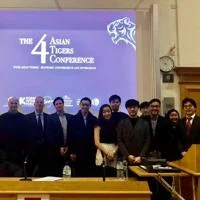
Economic Prospects and Problems of the Four Asian Tigers
This conference, co-hosted with LSESU socieities, examined the economic opportunities and challenges of the Four Asian Tigers including Singapore with four speakers representatingeach economy.
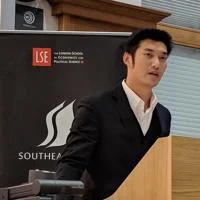
Prospects for Elections in Thailand: The Future Forward Party under the Spotlight
This meeting was an opportunity for academics and audience members to challenge leaders of Future Forward to explain their political agenda and their vision for Thailand.

(P)
This seminar analyses current trends, forecasts, and theories of labour automation with regard to Southeast Asia and will discuss a respective future research agenda.
(P)
The conference had of four expert panels that examined a range of prevalent issues facing Southeast Asia. The Keynote Lecture addressed Singapore's priorities as ASEANChair in 2018 and was given by Her Excellency Ms FooChi Hsia(High Commissioner of the Republic of Singapore to the United Kingdom).

SEACDirector Dr JürgenHaackeexplores the role of policy entrepreneurs in relation to some of the key policy shifts that the Obamaadministration embraced towards Myanmarbetween 2009 and 2016.

Overcoming Poverty and the Role of Politics on Economic Growth in the Philippines
Maria Leonor"Leni" GeronaRobredo, elected as Vice President of the Philippines on May 2016, speaks about her commitment to a pro-poor administration founded on good governance, as well as strong social welfare, public infrastructure and national security.
(P)
This seminar analyses whether multi-faceted 'Graduation Packages' could be the key to unlocking poverty traps for some of Southeast most vulnerable groups.
This research seminar examines how trade agreements could allow countries to promote backward linkages in value chains, with a particular focus on Vietnam.

SEACAssociate Dr KirstenSchulzelooks at the Ambon jihad fought in the context of the Ambon conflict in Indonesia from 1999-2005.
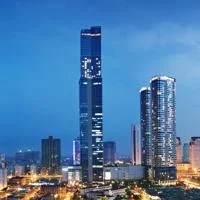
(P)
SEACAssociate Dr HyunBang Shin investigates the practices of South Korean and Singaporeanreal estate developers in Vietnam, and what effect they have had on social and spatial justice.

Red North, Blue North, Yellow North, Whose North? Contesting Thai Nationalism in ShinawatraCountry (P)
SEACVisiting Appointment Dr Joel Selwayexplores whether there are certain elements of nationalism that boost Thai national identity in the north of the country more than others.

This Research Fund seminar explores some of the issues linked to illicit drug markets in Myanmarwith reference to the UN 2030 Agenda for Sustainable Development.

Was the ISIS Threat in Southeast Asia Overblown? (P)
Sidney Jones looks at the factors that raised alarm bells about terrorism in Southeast Asia, the lessons learned from Marawiand the risks going forward.

This talk considers whether the ‘socialist’ elements of the early years of Singapore’s state formation by the People’s Action Party (PAP) accounts for the party’s longevity in parliamentary power.
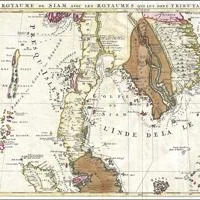
(P)
In its 50th year, ASEANfaces a range of contemporary challenges that have called into question its strategic place and security contributions in East Asia. This talk considers the mixed effects of ASEANinstitutions on Asia's changing strategic environment and the dynamics of great power competition.
Drawing upon ASEAN's policies in the United Nations and World Trade Organisation, Professor JürgenRülandaddresses the ways in which member governments in the Association of Southeast Asian Nations (ASEAN) achieve a collective presence in global fora.

(P)
His Excellency Dr RizalSukma, Ambassador of the Republic of Indonesia to the UK and Ireland, assessed Indonesia's role in ASEAN and the extent to which ASEANremains the main platform for the attainment of Indonesia's changing national and international priorities.

Armed Groups, State and Society in Myanmar (P)
Based on years of extensive field work in the border areas of Myanmar, panellists discussed the dynamics of armed politics, social orders and state formation in light of the country's peace process and wider transition.
This event was hosted in collaboration with the LSE Global South Unit.
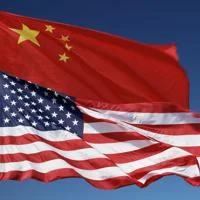
This double-panel event compared and contrasted old and new priorities and policy instruments pursued by the US and China vis-a-vis East Asia, and examined how states in Northeast and Southeast Asia are manoeuvring in reaction to the various challenges.
The event was in collaboration with the LSE Department of International Relations
The day included a keynote lecture by H.E. Antonio M. Lagdameo, the Ambassador of the Philippines to the UK, and four expert panels that examined a range of prevalent issues that have affected the region since the establishment of ASEAN50 years ago, including the AEC, foreign and domestic policy, and human rights agendas.

(P)
Civil society in Southeast Asia has come under threat from shrinking political space, funding challenges and internal competition over issues and resources. Dr James Gomezasks: what is the future of human rights in the region?

(P)
Dr John Ciorciaridiscussed the practice of "sharing sovereignty" is apparent in Timor-Lesteand Cambodia, where the UN shares responsibility for key sovereign functions when national governments cannot do so effectively.
(P)
Dr GaneshanWignarajaexamines the costs and benefits of closer infrastructure connectivity between South and Southeast Asia, and the role of national policies and the Regional Comprehensive Economic Partnership.
(P)
Dr KhinMar Mar Kyi, Dr David Brennerand Prof Marie Lalldiscuss to what extent has DawAungSan SuuKyibeen able to make headway on major issues and key challenges the country has faced, one year after Myanmar's landslide election.
(P)
Dr Michael Buehlerand Dr Chris Chaplin discuss to what extent there has been growing acceptance for conservative Islamic activism and how democracy has provided opportunities for politicians and Islamic organisations to push an Islamic agenda.
(P)
Dr Stephen James looks at serial migrants through their varied forced journeys across the globe and into local and transnational group identities across the Middle East, Africa and South Asia.
(P)
Political contestations between the state and minority groups have long been a major feature of Southeast Asia. Prof Joseph Liow casts light of the religious character of some of these conflicts.
(P)
Although substantial development challenges remain, Vietnam’s achievements are remarkable. Prof JörnDoschasks: is Vietnam’s rapid development a success story of development cooperation or rather the result of domestic reforms?

(P)
Dr TrudeJacobsen examines long-standing cultural perspectives toward marriage, familial obligation, debt bondage, and the implications that ethnicity and gender have for persons entering into these contracts.
The key question is whether the next US president will make Asia a priority and how the region will react to it. Dr EvanMedeiros discusses this and other issues at a critical time for the Asia-Pacific.
(P)
Prof Mark R Thompson looks at why Dutertewon the recent presidential election and has "stuck to his guns" in waging a violent war on drugs and explores its implications for the future of democracy in the Philippines and beyond.

(P)
Tjacovan den Houtdiscusses what has been at stake from the perspective of international law, the UN Convention on the Law of the Sea (UNCLOS), its default mechanism of arbitration to settle disputes, and the legality of territorial claims.
(P)
The day included two keynote lectures and four expert panels on topics including: ASEANSecurity, religion in Southeast Asia, inclusion and exclusion in Southeast Asia, and a panel by the LSE SU ASEANSociety.

(P)
ASEANhas never been able to realizeits full political and economic potential. KhunAbhisitVejjajivaasks: what are the main impediments holding ASEANback? Can ASEANplay a role in re-shaping a new regional order in the Asia-Pacific region?

(P)
Peter Pophamshowcases his latest book The Lady and the General and seeks to identify the secrets of AungSan SuuKyi's phenomenal achievements as a woman in a highly macho political culture.
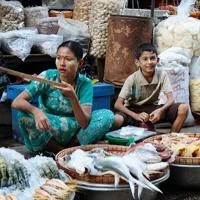
Yanmagon: Faces of Yangon is a portrait of a changing city, the former capital of Myanmar, through the eyes of its activists, architects, poets, photographers. Director FrançoisLePivainanswers a Q&A on his production.
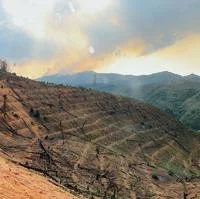
Dr David Clinnickand Dr James Walker explore how early farming techniques spread throughout island Southeast Asia, finding that archaeological data seemed to contradict many common and contemporary views on slash-and-burn farming.

H.E. EnriqueA. Manalo clarifies the Philippine policy on the West Philippine Sea and its understanding of its international treaty obligations under the 1982 LOSC, the UN Charter and the ASEANCharter.

Prof William Clarence-Smith discusses how Middle Eastern and South Asian migrants contributed significantly to the history of the colonial Philippines, chiefly coming to profit from a frontier of economic opportunity.

Dr ClaireSmith argues that if we contrast the ending to East Timor’s civil war with that of the comparable war in Papua, we can sharply see just how contingent East Timor’s negotiated ending was on a unique combination of specific events.

(P)
Dr Roger Montgomery examines recent evidence on deforestation, the cause and impact of El Nino, and in contrast the surprising areas where tree planting has been a major success in Indonesia.

(P)
Bruce Watson argues that Australia’s motivation in supporting Indonesian independence was not founded on liberal internationalism or distaste for colonialism, it was founded as a quest for security.

(P)
Dr FeliciaYap analyses the material culture of migrating Allied captives during the Japanese occupation of British Asia, focusing on the experiences of civilians in occupied Hong Kong, with examples from Malaya, Singapore and Borneo.
(P)
Dr Greg Fealy examines the multiple motivations that have led fighters from Indonesia, Malaysia and Singapore to join ISIS, looking at the structures of mobilisation and recruitment for the Islamic State.

(P)
Dr CaroolKerstendiscusses his latest book, Islam in Indonesia: The Contest for Society, Ideas and Values which examines intra-Muslim debates on the role of Islam in public life which evinces a broad spectrum of voices characterizedby two developments.
Despite the region’s enormous diversity, almost all of ASEAN’s members are showing a greater interest in supporting peacekeeping operations. Dr David Capie explores evolving attitudes towards peacekeeping among Southeast Asian states.
On Saturday 28th November, as part of the 120th anniversary celebrations, LSE held its Asia Forum in Singapore. The event, within the new series of regional LSE Global Forums, celebrated the achievements of the School and its alumni.

Dr Nicholas Long analyses how the difficulty of accurate moral perception within Indonesia’s RiauIslands Province leads citizens to abrogate their own responsibility with a state that has constituted itself as an Islamic actor.
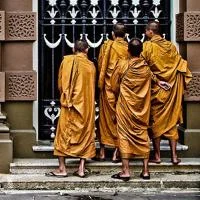
Dr Matthew Walton argues that, while the issue of monastic engagement with politics will remain an essentially contested question, examining monks’ arguments in particular contexts can reveal changing dynamics in the institution of the sangha.

(P)
Mark Canning, Dr JurgenHaackeand ShibaniMahtanidiscuss the outcome of those general elections and how Myanmarwill achieve economic success comparable to those of its ASEANneighbours.

DatoNoorFaridaAriffin, former Malaysian Ambassador to the Netherlands, expresses the grave concerns over religious bodies asserting authority beyond their jurisdiction; and various fatwawhich violate the Federal Constitution.

(P)
Henry M. PaulsonJr. talks about his new book, Dealing with China, which takes readers behind closed doors to the future of China's state-controlled capitalism, in conversation with Lionel Barber.
What is the "Malaysian nation" – and what is the state of its health? In this lecture Tunku'AbidinMuhrizconsiders the competing versions of the Malaysian nation, and the resultant divergent prognoses and calls to action.

Dr PavinChachavalpongpundiscusses the unlikeliness of stabilising Thai politics, as voters become alienated in the political process à la Prayuth, and large-scale violent protests are seen as unavoidable in order to restore democracy.

(P)
This year ASEANbecomes an integrated economic community. AhmadZakiiAnwar, NicksonFongand Yang-May Ooiask: what is the culture that sits comfortably with Southeast Asia's place in the global economy?
(P)
Prof DannyQuah, Prof ConorGearty, IsabellaStegerand Raymond Li discuss how the Umbrella Revolution has re-ignited a worldwide debate on democracy in particular, and a battle over success in economic and political governance.

Banner photo by Wan San Yip on Unsplash