Overview
Introduction
You’ll learn about the uneven impact of economic activity globally and deepen your understanding of the forces driving social, political, environmental and economic change. The programme provides a solid grounding in geography and economics, building your knowledge in mathematical and statistical analysis. This will equip you with a range of transferable skills for your future career.
You’ll have considerable flexibility to tailor the degree to your interests – in areas such as economic geography, sustainable development, urban geography, regional development and human geography. You can take part in an international field trip in the second year.
LSE is rated second globally for Geography and sixth for Economics (2026 QS World University Rankings by Subject). Our academics are at the forefront of global research, working with policymakers, the third sector and big business to apply their insights to real-world issues. So, you’ll learn from the best.
Your time will be split 75/25 between geography and economics.
Preliminary readings
Geography
- P Cheshire, M Nathan and H Overman Urban Economics and Urban Policy: challenging conventional policy wisdom (Edward Elgar, 2014)
- E Glaeser Triumph of the City (Penguin Press, 2011)
- S Chant and C McIlwaine Geographies of Development in the 21st Century: an introduction to the Global South (Edward Elgar 2009)
- P Cloke, P Crang and M Goodwin (Eds) Introducing Human Geographies (3rd edition, Hodder Arnold, 2013)
- P Dicken Global Shift: mapping the changing contours of the world economy (Sage Publications, 2015)
- A Jones Human Geography: the basics (Routledge, 2012)
- W Oates (Ed) The RFF Reader in Environmental and Resources Management (Resources for the Future, 2006)
- A Pike, A Rodríguez-Pose and J Tomaney Local and Regional Development (Routledge 2016)
- M Storper Keys to the City: how economics, institutions, social interaction and politics shape development (Princeton University Press, 2013)
- E Moretti The new geography of jobs (Mariner, 2013)
- O'Sullivan Urban Economics (Irwin/MacGraw-Hill, 2012)
A number of academic staff have spoken at public lectures – these are available to listen again as podcasts, for example Professor Henry Overman, Professor Steve Gibbons and Professor Michael Storper.
Economics
- A V Banerjee and E Duflo Poor Economics: barefoot hedge-fund managers, DIY doctors and the surprising truth about life on less than $1 a day (Penguin, 2012)
- T Harford The Undercover Economist (Abacus, 2007)
- S D Levitt and S J Dubner Freakonomics (Penguin, 2007)
- S D Levitt and S J Dubner Superfreakonomics (Penguin, 2010)
It is a very good idea to have a look at one or more economics textbooks, to have a clear idea of what the serious university study of the subject involves, which will differ from these popular presentations. Although the texts and editions listed below are currently recommended for the first year, other editions of these books and other university-level textbooks are also entirely valid for this first investigation.
- N G Mankiw Macroeconomics (7th edition, Worth Publishers, 2010)
- W Morgan, M L Katz and H Rosen Microeconomics (2nd edition, McGraw-Hill, 2009)
Entry requirements
Here, you can check our entry requirements for GCSEs, A-levels (please read them alongside our information about subject combinations) and the International Baccalaureate (IB) Diploma. We also consider applications from students with a range of other UK qualifications and from overseas. Please select the overseas button below and choose your country from the dropdown list to find the equivalency to A-levels of your qualification.
The requirements outlined below apply to 2026 entry only.
Home
Achieve a strong set of GCSE grades including the majority at A (or 7) and A* (or 8-9)
GCSE (or equivalent) English Language and Mathematics grades should be no lower than B (or 6)
We also consider your overall GCSE subject profile
AAA, including an A in Mathematics
We also consider your AS grades, if available
ABB, including an A in Mathematics
Learn more about LSE’s approach to contextual admissions and offers.
- We consider your combination of subjects as well as your grades.
- A broad mix of traditional academic subjects provides the best preparation for studying at LSE. We expect applicants to have at least two full A-levels (or equivalent) in these subjects.
- You’ll need strong mathematical abilities, and A-level Mathematics (or equivalent) is therefore required.
- We’re looking for academic students with a genuine interest in and enthusiasm for the social sciences and human behaviour.
- There is no one set subject combination. However, many applicants study one or more social science subjects in the sixth form (with Geography and Economics being the most common subjects). Other typical subjects include Government and Politics, Sociology, History or a natural science.
- If you’ve taken Mathematics, Further Mathematics and one other subject at A-level, this may be considered a less competitive combination than a broader mix of essay-based and quantitative subjects.
- A-level Economics (or equivalent) is not required. You don’t need to have studied Economics for the first-year economics courses, although many students will have done so.
38 points overall, with 766 at higher level, including Mathematics
36 points overall, with 665 at higher level, including 6 in Mathematics.
Learn more about LSE’s approach to contextual admissions and offers.
Overseas
You may also have to provide evidence of your English proficiency, although this isn't needed at the application stage. See our English language requirements page.
We welcome students from all walks of life at LSE. We want to recruit students with the very best academic merit, potential and motivation. So, whatever your background, please do apply. Get all the details on our general entry requirements.
Competition for places at LSE is high. We cannot guarantee you an offer of a place even if you’re predicted or achieve our standard entry requirements.
Our standard offer requirements are intended only as a guide and, in some cases, you’ll be asked for different grades.
Programme content
On this programme, you’ll study 12 units over three years, plus LSE100.
Year 1
You’ll take methodology courses, a geography course and economics courses as well as one option from a choice of three. Additionally, you’ll take LSE100.
Year 2
Your second year involves several compulsory courses in geography and one in microeconomics. You can choose between courses in microeconomics and econometrics and further geography and environment options.
Fieldwork is an important part of the programme and you can take part in an overseas field trip on the Field Methods in Geography and Environment course (see the Fees and Funding section for details of costs).
Take a look at our students’ reflections on their trip to Cagliari, Sardinia (2023/24). Clearly, they found it inspirational!
Courses to the value of one unit
Year 3
In the final year, you'll take two compulsory half-unit courses in geography. Then, you’ll choose from a range of geography and economics options totalling three units (with a maximum of two economics units).
Geography and/or economics courses to the value of three units
For the latest list of courses, please go to the relevant School Calendar page.
You may be able to take a language, literature or linguistics option as part of your degree. Find all the details on our Centre for Language Studies webpages.
A few important points you’ll need to know:
We may need to change, suspend or withdraw a course or programme of study, or change the fees due to unforeseen circumstances. We’ll always notify you as early as possible and recommend alternatives where we can.
The School is not liable for changes to published information or for changing, suspending or withdrawing a course or programme of study, due to developments in teaching practice, regulatory requirements that require us to comply, lack of demand, financial unviability of a course, or due to circumstances beyond our control, such as the loss of a key member of staff or where a location or building becomes unavailable for use.
Places are limited on some courses and/or subject to specific entry requirements so we cannot therefore guarantee you a place.
Changes to programmes and courses may be made after you’ve accepted your offer of a place – normally due to developments in the discipline or as a consequence of student feedback. We may also make changes to course content, teaching formats or assessment methods but these are made to improve the learning experience.
For full details about the availability or content of courses and programmes, please take a look at the School’s Calendar, or contact the relevant academic department.
Some major changes to programmes/courses are posted on our updated undergraduate course and programme information page.
For further information on how we comply with UK consumer protection law, see your consumer rights as a student.
Why study with us
Discover more about our students and department.
Meet the department
Our department is highly regarded both nationally and internationally – ranked second for Geography in the QS World University Rankings by Subject 2026.
Here at LSE, we offer a unique opportunity to study geography in a university with a worldwide reputation in the social sciences. We specialise in economic, urban and development geography, environmental social science and climate change, all with a strong emphasis on real-world applications.
Many of our academics are internationally renowned in their fields. You’ll find a good balance of experienced and younger academics in the department. Within the team, we’ve had three holders of the highly prestigious Philip Leverhulme Prize Fellowships for researchers under the age of 36.
Our research is interdisciplinary and international in its scope and we work closely with academics from several other departments at LSE. Teaching staff are active within the following research centres:
- Cañada Blanch Centre for Contemporary Spanish Studies
- Centre for Climate Change Economics and Policy
- Centre for Economic Performance
- Grantham Research Institute on Climate Change and the Environment
- LSE London
- Middle East Centre
- Saw Swee Hock Southeast Asia Centre
- Transition Pathway Initiative Centre
- What Works Centre for Local Economic Growth
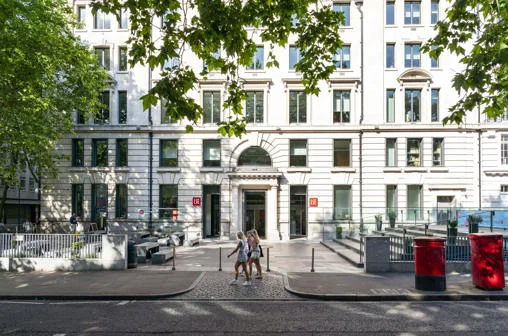
Based in the heart of London opposite Lincoln’s Inn Fields, the department offers a lively, welcoming and supportive community for students and staff.
Learn more about our undergraduate, postgraduate and PhD study opportunities, as well as our research.
Why LSE
Russell Group University of the Year and 2nd in the UK
Times and The Sunday Times - Good University Guide 20271st in London for the 15th year running
The Complete University Guide - University League Tables 20275th in the world for the study of social sciences and management
QS World University Rankings by Subject 20266th in the world for leading the way in social and environmental sustainability
QS World University Rankings: Sustainability 2026Your application
Overview
We consider each application carefully, taking into account all the details you’ve included on your UCAS form, such as:
- academic achievement, including predicted and achieved grades (also see specific information about this programme in the "entry requirements" above)
- subjects and subject combinations (also see specific information about this programme in the "entry requirements" above)
- your personal statement
- your teacher’s reference
- educational circumstances
Who attends
We’re looking for students who demonstrate:
- strong mathematical abilities and quantitative skills
- an interest in contemporary geographical problems and their solutions
- an ability to evaluate and challenge conventional views
- intellectual curiosity
- the ability to follow complex lines of reasoning and analyse data
- an ability to think independently and show initiative
- excellent time-management skills
- self-motivation and a willingness to work hard
- a proportionate interest in geography and economics
Fees and funding
The table of fees shows the latest tuition fees for all programmes.
You're charged a fee for each year of your programme. Your tuition fee covers registration and examination fees payable to the School, lectures, classes and individual supervision, lectures given at other colleges under intercollegiate arrangements and, under current arrangements, membership of the Students' Union. It doesn't cover living costs or travel or fieldwork.
Home
Home student fee per each year of your programme
This is the provisional tuition fee for Home students starting in 2027/28.
The Home undergraduate tuition fee is set in line with the maximum fee determined by the UK Government and published by the Office for Students (OfS). The fee may increase in subsequent years in line with changes to the maximum fee set by the UK Government.
You should expect to pay a contribution of approximately £500 towards your fieldtrip for the second-year course Field Methods in Geography. There are fieldtrip bursaries available from the department for students who can document financial need. An alternative field exercise will be undertaken by students who are unable to participate in the above one-week residential fieldtrip.
Overseas
Overseas student fee per each year of your programme
This is the 2027/28 fee for each year of your programme. The Overseas tuition fee will remain at the same amount for each subsequent year of your full-time study regardless of the length of your programme. This information applies to new Overseas undergraduate entrants starting their studies from 2027/28 onwards.
You should expect to pay a contribution of approximately £500 towards your fieldtrip for the second-year course Field Methods in Geography. There are fieldtrip bursaries available from the Department for students who can document financial need. An alternative field exercise will be undertaken by students who are unable to participate in the above one-week residential fieldtrip.
Your tuition fees, and eligibility for any financial support, depend on whether you’re classified as a home or an overseas student – known as your fee status. We assess your fee using The Higher education (Fee Limit Condition) (England) Regulations 2017.
Learn more about fee status classification.
We recognise that the cost of living in London may be higher than in your home town or country. LSE offers a range of financial support to help eligible students with the cost of studying.
For UK Home fee status students, this includes the LSE Bursary, LSE Scholarships, the LSE Accommodation Bursary, and the Care-Experienced and Estranged Student Bursary. UK students may also be eligible for government student loans.
For Overseas fee status students, the School provides a range of bursaries and scholarships, including the LSE Access to Education Scholarships, to support your undergraduate study. These awards are funded by philanthropic donations to LSE and vary each year in number, value and eligibility criteria.
Learning and assessment
How you learn
Format and contact hours: you’ll have weekly lectures and classes totalling 12 to 15 hours per week in the first year. Hours vary depending on the course. Get a broad idea of the study time involved in the Calendar within the Teaching section of each course guide.
Independent study: you’ll be expected to complete independent study outside your classes. This varies depending on the course and you’ll need to manage your study time effectively. Independent study typically involves reading, note-taking and research.
LSE teaching: our School is internationally recognised for teaching and research and you’ll learn from academics with a wide range of experience and knowledge. Lectures are normally given by academic staff while classes are normally led by PhD students or fellows.
Courses on spatial analysis and research techniques involve practical work. You’ll take part in fieldwork, some of which may be abroad. Learn about the teacher responsible for each course in the relevant course guide.
Academic mentor: you’ll meet with your academic mentor regularly to discuss your work. Your mentor can provide advice and guidance on academic issues and, where appropriate, personal concerns.
Other academic support: at LSE, we offer lots of opportunities to extend your learning outside the classroom.
The Learning Lab is the place to discover and develop the skills you’ll need to reach your academic goals at LSE.
Through the Learning Lab, you can:
- attend practical workshops and one-to-one sessions on essay writing, conducting research, and on managing your reading lists, workloads, and deadlines
- develop your academic writing, reading, and critical-thinking skills to meet degree-level expectations
- work in study groups to strengthen collaboration, cross-cultural communication, and teamwork skills in a supportive environment.
Disability and Mental Health Service: we want all LSE students to achieve their full potential. Students can access free, confidential advice through our Disability and Mental Health Service. This is the first point of contact for students.
- The standard teaching day runs from 9am to 6pm, Monday to Friday. Undergraduate teaching is not normally scheduled for Wednesdays after 12 noon to allow for sports, volunteering and other extra-curricular activities.
- The lecture and seminar timetable is published in mid-August and the full academic timetable (with information on classes) is published by mid-September via the LSE timetables web pages.
- All personal undergraduate timetables are published in LSE for You (LFY). For personal timetables to appear, you must be registered at LSE, be signed up for courses in LFY and ensured that there are no unauthorised clashes in your course selections. We try our best to minimise changes once personal timetables have been published. However, you’ll be notified about any changes by email.
How you're assessed
Formative coursework
All taught courses include formative coursework, which is not assessed. This helps prepare you for summative assessment. We use a wide range of formative assessment methods, such as essays, case studies, reports, quizzes and mock exams. Feedback on coursework is an essential part of the learning experience. Feedback is normally given within three weeks – provided you’ve submitted your work on time.
Summative assessment
This assessment counts towards your final course mark and degree award.
- Most full units are assessed through coursework and/or Summer Term exams.
- Autumn Term half units are mostly (but not exclusively) assessed through coursework.
- Winter Term half units are mostly assessed through either coursework or summer term exams.
You’ll also receive feedback on summative coursework.
For assessments set during the Autumn or Winter Terms, individual feedback will normally be provided within four weeks of submission. For dissertations, you’ll receive feedback within four weeks of the start of the following term (School holidays excluded).
Please note: assessment methods vary by course and this information provides a general guide only. You’ll find details of formative coursework and summative assessments for each course in the relevant course guide.
Graduate destinations
Overview
Recent graduates from this programme have gone on to work in the areas of financial services, planning, consultancy, administration, marketing, development, teaching and further study.
Read more on graduate destinations for this programme.
Top 5 sectors our students work in:
Career support
From CV workshops through to careers fairs, LSE offers lots of information and support to help you make that all-important step from education into work.
Many of the UK’s top employers give careers presentations at the School during the year and there are numerous workshops covering topics such as job hunting, managing interviews, writing a cover letter and using LinkedIn.
See LSE Careers for further details.
Discover Uni
Every undergraduate programme of more than one year duration will have Discover Uni data. The data allows you to compare information about individual programmes at different higher education institutions.
Programmes offered by different institutions with similar names can vary quite significantly. We recommend researching the programmes you're interested in and taking into account the programme structure, teaching and assessment methods, and support services available.
Find out more
Explore LSE
Student life

Student support

Accommodation

Meet, visit and discover LSE