Overview
Introduction
This programme offers the chance to undertake a substantial piece of work that is worthy of publication and which makes an original contribution to the field of Human Geography and Urban Studies. You'll begin on the MPhil, and will need to meet certain requirements to be upgraded to PhD status.
This PhD offers training both in human geographic research and in interdisciplinary approaches to understanding/responding to the challenges of an era of rapid urbanisation and urban redevelopment around the world. Urbanisation and development are the main focus of work by both staff and students associated with this programme. But it also provides opportunities for research on topics and issues within human geography which are not specifically “urban” but which relate to other areas of expertise and interest of academic staff within the Urbanisation, Planning and Development cluster.
The MPhil/PhD Human Geography and Urban Studies aims to:
- provide advanced knowledge of the principles and conceptual foundations of human geographic and urban social science research, together with the research skills and methodological understanding needed to develop original research in the field;
- expose you to the most recent developments and debates in human geography and urban studies;
- prepare you for careers in research, academia, international organisations, urban planning and governance, the consultancy sector and NGOs.
The Urbanisation, Planning and Development cluster of the Department of Geography and Environment involves a concentration of researchers with particular interests in how social, economic and political processes interact across a range of urban contexts in all continents, and in different conditions of development. Issues related to the urban economy are also strongly represented within the department's Economic Geography cluster. Research students on this programme are strongly encouraged to engage with the full range of urban research, teaching and scholarship within LSE's wider urban research community.
Preliminary readings
- Howard Becker, Writing for Social Scientists: how to start and finish your thesis, book, or article (University of Chicago Press, 2007)
- Patrick Dunleavy, Authoring a PhD: how to plan, draft, write and finish a doctoral thesis or dissertation (Palgrave Macmillan, 2003)
Entry requirements
The programme is offered in the following alternative formats:
Either the standalone MPhil/PhD Human Geography and Urban Studies (+3 route)
Or combined with the MSc Human Geography and Urban Studies progressing onto the MPhil/PhD Human Geography and Urban Studies (1+3 Route)
+3 Route: MPhil/PhD Human Geography and Urban Studies (2-4 years)
The minimum entry requirement for the standalone PhD +3 programme, is a taught master’s degree (or equivalent), with a minimum of 65 per cent average and at least 70 in the dissertation, in a related discipline.
1+3 Route: MSc Human Geography and Urban Studies (1 year) + MPhil/PhD Human Geography and Urban Studies (2-4 years)
The 1+3 route – suitable if you don't hold a relevant postgraduate degree – is aimed at students graduating with an undergraduate degree in geography or similar social science subject. See entrance requirements for the MSc Human Geography and Urban Studies.
The 1+3 Combined PhD Programme is only available as part of an ESRC Funded pathway. The 1+3 scheme provides funding for a one-year research training master's linked to a PhD programme and is designed for students who have not already completed an ESRC recognised programme of research training. The ESRC 1+3 scholarship covers the master’s and the PhD programme and so takes up to five years in total. Progression from the master’s onto the PhD programme is dependent upon performance in the master’s programme (students must score 65 per cent overall and at least 70 in their dissertation to comply with the department’s usual PhD entry criteria).
To apply for the 1+3 route, an application must be submitted for the MSc Human Geography and Urban Studies (Research), including a research proposal for the PhD aspect of the pathway. Applicants must also indicate their wish to be considered for the 1+3 pathway and associated funding within their personal statement. Students who apply for the PhD programme directly will not be considered for the 1+3 pathway.
Research proposal
All prospective students are expected to submit a three-page long (excluding references and appendix) research proposal, which will form part of their application package. Submitted proposals should briefly address: research questions and hypotheses; relevant literature and previous research in the field; potential contribution to knowledge; likely methods and approaches to be adopted; likely data and information sources to be used. A research timetable (of three or four years) must be included as an appendix. Note that we only accept PhD topics that are close to relevant staff interests, so we recommend prospective applicants to check our staff publications and current research agendas (our departmental web pages list key research topics).
Selection is based upon the quality of your research proposal, references, prior achievement, and the appropriateness of your research topic to the Department's research focus. While we normally interview prospective research students (in person or over the phone/Skype), your written proposal is of the utmost importance.
Please select your country from the dropdown list below to find out the entry requirements that apply to you.
Overseas
English language requirements
The English language requirement for this programme is Research. Read more about our English language requirements.
Competition for places at LSE is strong. So, even if you meet the minimum entry requirements, this doesn't guarantee you an offer of a place.
However, please don’t feel deterred from applying – we want to hear from all suitably qualified students. Think carefully about how you can put together the strongest possible application to help you stand out.
Programme content
In addition to progressing with your research, you're expected to take the courses listed below. You may take courses in addition to those listed but must discuss this with your supervisors.
Year 1
- You may take course(s) to the value of a half unit from the list of options available on MSc Human Geography and Urban Studies
- if appropriate, other advanced research methods courses – for example in quantitative methods – can be chosen, subject to the supervisors' and the course teacher's approval
- if you've completed MSc Human Geography and Urban Studies you must take different course(s) to those you've already taken.
Year 2
At the end of your second year (full-time), you'll need to satisfy certain requirements and if you meet these, will be retroactively upgraded to PhD status.
Year 3
Year 4
For the latest list of courses, please go to the relevant School Calendar page.
A few important points you’ll need to know:
We may need to change, suspend or withdraw a course or programme of study, or change the fees due to unforeseen circumstances. We’ll always notify you as early as possible and recommend alternatives where we can.
The School isn't liable for changes to published information or for changing, suspending or withdrawing a course or programme of study, due to developments in teaching practice, regulatory requirements that require us to comply, lack of demand, financial unviability of a course, or due to circumstances beyond our control, such as the loss of a key member of staff or where a location or building becomes unavailable for use.
Places are limited on some courses and/or subject to specific entry requirements so we cannot therefore guarantee you a place.
Changes to programmes and courses may be made after you’ve accepted your offer of a place – normally due to developments in the discipline or as a consequence of student feedback. We may also make changes to course content, teaching formats or assessment methods but these are made to improve the learning experience.
For full details about the availability or content of courses and programmes, please take a look at the School’s Calendar, or contact the relevant academic department.
Some major changes to programmes/courses are posted on our updated graduate course and programme information page.
For further information on how we comply with UK consumer protection law, see your consumer rights as a student.
Why study with us
Discover more about our students and department.
Meet the department
Our department is highly regarded both nationally and internationally – ranked second for Geography in the QS World University Rankings by Subject 2026.
Here at LSE, we offer a unique opportunity to study geography in a university with a worldwide reputation in the social sciences. We specialise in economic, urban and development geography, environmental social science and climate change, all with a strong emphasis on real-world applications.
Many of our academics are internationally renowned in their fields. You’ll find a good balance of experienced and younger academics in the department. Within the team, we’ve had three holders of the highly prestigious Philip Leverhulme Prize Fellowships for researchers under the age of 36.
Our research is interdisciplinary and international in its scope and we work closely with academics from several other departments at LSE. Teaching staff are active within the following research centres:
- Cañada Blanch Centre for Contemporary Spanish Studies
- Centre for Climate Change Economics and Policy
- Centre for Economic Performance
- Grantham Research Institute on Climate Change and the Environment
- LSE London
- Middle East Centre
- Saw Swee Hock Southeast Asia Centre
- Transition Pathway Initiative Centre
- What Works Centre for Local Economic Growth
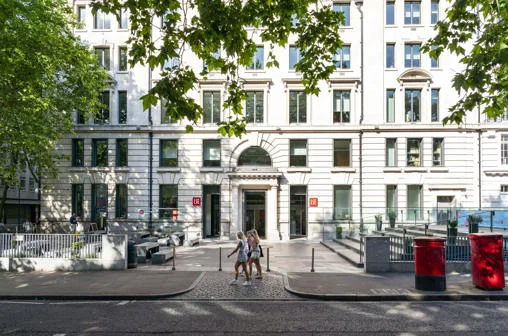
Based in the heart of London opposite Lincoln’s Inn Fields, the department offers a lively, welcoming and supportive community for students and staff.
Learn more about our undergraduate, postgraduate and PhD study opportunities, as well as our research.
Why LSE
Russell Group University of the Year and 2nd in the UK
Times and The Sunday Times - Good University Guide 20271st in London for the 15th year running
The Complete University Guide - University League Tables 20275th in the world for the study of social sciences and management
QS World University Rankings by Subject 20266th in the world for leading the way in social and environmental sustainability
QS World University Rankings: Sustainability 2026Your application
Overview
We welcome applications for research programmes that complement the academic interests of our staff at LSE. For this reason, we recommend that you take a look at our staff research interests before applying.
We carefully consider each application and take into account all the information included on your form, such as your:
- academic achievement (including existing and pending qualifications)
- statement of academic purpose
- references
- CV
- outline research proposal
- sample of written work.
See further information on supporting documents.
You may need to provide evidence of your English language proficiency. See our English language requirements.
Part-time study
Please note that LSE allows part-time PhD study only under limited circumstances. If you wish to study part-time, you should mention this (and the reasons for it) in your statement of academic purpose, and discuss it at interview if you're shortlisted.
For students awarded an Economic and Social Research Council (ESRC) studentship, the structure and duration of the studentship offered, including part-time study, will depend on a candidate's previous academic experience, and social research training and experience. ESRC studentships are applicable to both full-time and part-time study. We can discuss part-time options with you if you're interested in applying. International students requiring a student visa should also see the student visas information in the GOV.UK website and the LSE visa advice for more details.
When to apply
The application deadline for this programme is 13 January 2027.
If you’d like to be considered for any funding opportunities, you must submit your application (and all supporting documents) by this application and funding deadline.
See the fees and funding section below for more details.
Fees and funding
The table of fees shows the latest tuition fees for all programmes.
You're charged a fee for your programme. Your tuition fee covers registration and examination fees payable to the School, lectures, classes and individual supervision, lectures given at other colleges under intercollegiate arrangements and, under current arrangements, membership of the Students' Union. It doesn't cover living costs or travel or fieldwork.
Home
Home student fee (students starting in 2027/28)
The fee above applies to the first year of the programme only and is likely to rise over the full duration of the programme. The School charges home research students in line with fee levels recommended by the Research Councils.
Learn more about fee status classification.
Overseas
Overseas student fee (students starting in 2027/28)
The fee above applies to the first year of the programme only and is likely to rise over the full duration of the programme in line with the assumed percentage increase in pay costs (ie, four per cent each year).
Learn more about fee status classification.
At LSE, your tuition fees, and eligibility for any financial support, will depend on whether you’re classified as a home or overseas student (known as your fee status). We assess your fee status using The Higher education (Fee Limit Condition) (England) Regulations 2017.
Scholarships, studentships and other funding
We recognise that the cost of living in London may be higher than in your home town/city or country and we provide generous scholarships to help both home and overseas students.
For this programme, students can apply for LSE PhD Studentships, Economic and Social Research Council (ESRC) funding and for Bloomberg Philanthropies PhD Studentships in Cities. To be considered, you’ll need to submit your application (and any supporting documents) before the funding deadline.
Funding deadlines
Funding deadline for LSE PhD Studentships, ESRC funding, and for Bloomberg Philanthropies PhD Studentships in Cities: 13 January 2027.
All application materials, including references, must be received by this date in order to be considered for funding.
In addition to our needs-based awards, we offer scholarships for students from specific regions of the world and awards for certain subjects.
External funding
Additional funding opportunities may be available through other organisations or governments. We strongly recommend you investigate these options as well.
Further information
Learn more about fees and funding, including external funding opportunities
Learning and assessment
How you learn
You'll either be allocated a principal supervisor and a review supervisor, or two joint supervisors. One or both will be specialist in your chosen research field, though not necessarily in your topic. The department encourages – whenever possible – joint-supervision arrangements. However, please confirm your supervisory arrangements during your first meeting with your supervisor(s).
Joint supervisors will have a joint leading role throughout your studies, and you'll be able to meet them separately or jointly. Students with a main and a review supervisor should be aware that the main supervisor will have a leading supervisory role during the doctoral studies, whereas the review supervisor will be involved less frequently, being primarily responsible for progress monitoring and participating in review and upgrading decisions (see below). However, please keep your review supervisor abreast of your progress throughout the year and discuss with him/her any matters arising as soon as possible.
How you're assessed
Progression and assessment
Once on the MPhil/PhD programme you'll go through a First Year Progress Review, taking place in the Spring Term of your first research year. This is Year 1 for students in the +3 programme and Year 2 for students in the 1+3 programme. For the First Year Progress Review, you must submit a written progress report containing an extensive and updated research proposal (typically including an introduction to the topic and motivation for the research; aims and objectives/research questions; contribution to knowledge; summary of methods to be used; and outline of the work to be done) and either a comprehensive literature review or a substantive draft of a chapter/paper as evidence of progress made during the year. Normally, there will be a progress review meeting between you and the supervisors to discuss the written material presented. The work has to reach an acceptable standard to enable you to progress. There is provision for a second Supplementary Review in cases where there are doubts as to whether progress has been sufficient to allow entry to the second year (third year of the 1+3 programme). Progression to the second year (third year of the 1+3 programme) is also dependent on you having passed all required examinations obtaining at least one merit, and having presented your work satisfactorily in the doctoral presentation workshops.
All research students are initially registered for an MPhil and have to be upgraded to PhD status. The upgrade from MPhil to PhD usually occurs during the second year of full-time registration. This is Year 2 for students in the +3 programme and Year 3 for students in the 1+3 route. The exact timing depends on your progress. You're required to submit a formal written upgrade report consisting of an extensive revised research proposal, two substantive draft papers/chapters, of which one can be a literature review, and a detailed plan for completion. You'll be asked to discuss your research paper/thesis outline during an Upgrade Meeting in front of an Upgrading Committee normally formed by your main supervisor, your review supervisor and a third member of staff with relevant expertise. The material is evaluated by the Upgrading Committee, who will recommend transferral to PhD registration if your work is judged to be of sufficient quality and quantity. The upgrade is also dependent on you having completed all required training courses and having made a satisfactory research presentation in your doctoral presentation workshop.
In addition to these formal arrangements, each year during the Spring Term and throughout the course of your studies, you and your supervisors have to complete a yearly Progress Report Form, detailing the progress made, problems arising and a plan/timeline for completion. The forms are sent to the relevant Doctoral Programme Director for approval before you are able to re-register for the following session. If perceived lack of progress is identified, it can trigger a more formal annual review of progress in which you will be asked to produce specific written documents to be evaluated by a review panel.
Graduate destinations
Overview
Students who successfully complete the programme often embark on an academic career. The programme will also prepare you for careers in international organisations (eg, the World Bank, OECD, UNEP or European Commission), urban planning, governance, the consultancy sector, infrastructure providers and NGOs.
Further information on graduate destinations for this programme
Top 2 sectors our students work in:
Career support
From CV workshops through to careers fairs, LSE offers lots of information and support to help you make that all-important step from education into work.
Many of the UK’s top employers give careers presentations at the School during the year and there are numerous workshops covering topics such as job hunting, managing interviews, writing a cover letter and using LinkedIn.
See LSE Careers for further details.
Find out more
Explore LSE
Student life

Student support

Accommodation

Meet, visit and discover LSE