Overview
Introduction
This two-year programme gives you the chance to earn two degrees and study at two globally renowned institutions: LSE and the University of Toronto (Munk School).
Over the two years, you’ll develop key policy expertise in public affairs and draw on the academic strengths, networks, resources and career support of two world-leading universities.
In the first year at LSE, you’ll develop your knowledge and skills in political science, economics, quantitative analysis and the philosophical principles underlying good public policy. The second year at the University of Toronto adds an international affairs dimension. You’ll gain an in-depth understanding of the global system and its stakeholders, innovation policy, global justice, development, markets, and security. You’ll gain practical experience through an industry project and an internship.
The breadth of study and international perspectives will prepare you to tackle complex policy issues and excel in your future career. You’ll also benefit from a dedicated professional skills accelerator – giving you a head start over other graduates in the jobs market. Our graduates are well-placed to pursue high-impact roles in government, international organisations, not-for-profits, and the private sector.
You’ll graduate with a Master of Public Administration (MPA) from LSE and a Master of Global Affairs (MGA) from the University of Toronto.
Entry requirements
A BA degree or equivalent in any discipline with the following classifications:
A minimum Upper Second Class (2:1) in the UK system or international equivalent grade, in any subject discipline.
Please select your country from the dropdown list below to find out the entry requirements that apply to you.
Overseas
English language requirements
The English language requirement for this programme is Higher. Read more about our English language requirements.
Competition for places at LSE is strong. So, even if you meet the minimum entry requirements, this doesn't guarantee you an offer of a place.
However, please don’t feel deterred from applying – we want to hear from all suitably qualified students. Think carefully about how you can put together the strongest possible application to help you stand out.
Programme content
Preparation before your arrival
Prior to your arrival at LSE you'll receive details about optional readings and online learning materials which are designed to help you to prepare for the programme.
MPA Double Degree welcome and introductory teaching
From mid-September (exact date TBC) you'll need to attend MPA Welcome events and introductory teaching sessions. These will take place prior to the start of the LSE Autumn Term dates. These sessions include campus enrolment, a programme introduction, information sessions, networking opportunities, academic skills training and compulsory introductory teaching in mathematics and statistics.
If you've not studied mathematics and statistics for some time, the MPA introductory teaching provides a challenging but accessible introduction to some of the key skills and techniques required for the degree. For other students, it serves as a refresher course.
Year 1
School of Public Policy (SPP), London School of Economics and Political Science – Year One
In the first year, you'll take three compulsory courses, in micro- and macro-economics, political science and public policy, quantitative approaches and policy analysis. These provide a rigorous foundation to support you during the rest of the degree. You're also required to choose one unit of courses from a list of four choices to further develop core skills but in a direction you choose – see below. Your choice of option courses (electives) should be based on your academic strengths and interests.
Micro and Macro Economics for Public Policy: you'll learn macro- and micro- economic concepts, models and methods suitable for appraising policy, applicable in a wide variety of contexts. This includes the study of demand and supply, the labour market, public goods, market failure, inflation and monetary policy, fiscal policy and debt, and exchange rates.
Political Science and Public Policy - you'll learn concepts and models for understanding the behaviour of political actors and why they lead to particular outcomes. This includes the study of voting, political parties, interest groups, legislative politics, corruption, democratisation and ethnic conflict. These tools are essential for designing policy interventions to achieve desired future outcomes.
Quantitative Approaches and Policy Analysis - you'll learn skills for the quantitative evaluation of public policies, such as causal relationships; randomised control trials; difference-in-difference estimation; instrumental variables; regression discontinuity designs and cost-benefit analysis.
Courses from a range of options
Year 2
Munk School of Global Affairs and Public Policy, University of Toronto – Year Two
In the second year of the programme at the Munk School students must take the following courses:
Summer
- GLA1007H Global Internship (1.0 FCE, 10 to 16 weeks) plus a critical reflection paper to be submitted in September of Year 2.
Year 2
Fall and Winter (5.0 FCEs):
- GLA1016H Human Rights and Global Justice (0.5 FCE)
- GLA2111H Research Methods for Global Affairs (0.5 FCE)
- GLA2000H Capstone Seminar (0.5 FCE)
- GLA2887H Final Research and Analysis (0.5 FCE)
Additional 3.0 FCEs of electives in Year 2 (six half courses) at the 2000 level, all taken at the Munk School.
Summer (1.0 FCE):
- GLA2890Y Global Policy Review (1.0 FCE)
For details of the 2nd year courses please visit the Munk School of Public Policy and Global Affairs website.
For the latest list of courses, please go to the relevant School Calendar page.
A few important points you’ll need to know:
We may need to change, suspend or withdraw a course or programme of study, or change the fees due to unforeseen circumstances. We’ll always notify you as early as possible and recommend alternatives where we can.
The School isn't liable for changes to published information or for changing, suspending or withdrawing a course or programme of study, due to developments in teaching practice, regulatory requirements that require us to comply, lack of demand, financial unviability of a course, or due to circumstances beyond our control, such as the loss of a key member of staff or where a location or building becomes unavailable for use.
Places are limited on some courses and/or subject to specific entry requirements so we cannot therefore guarantee you a place.
Changes to programmes and courses may be made after you’ve accepted your offer of a place – normally due to developments in the discipline or as a consequence of student feedback. We may also make changes to course content, teaching formats or assessment methods but these are made to improve the learning experience.
For full details about the availability or content of courses and programmes, please take a look at the School’s Calendar, or contact the relevant academic department.
Some major changes to programmes/courses are posted on our updated graduate course and programme information page.
For further information on how we comply with UK consumer protection law, see your consumer rights as a student.
Why study with us
Discover more about our students and department.
Meet the department
The LSE School of Public Policy (SPP) is a global community united by a shared commitment to LSE’s founding mission: to understand the causes of things and work for the betterment of society.
Our master’s programmes combine academic rigour with real-world relevance, tailored to suit professionals at every stage of their career — from emerging leaders to seasoned executives.
SPP now welcomes a thriving community of more than 400 students who all share a passion for learning and developing new perspectives as they prepare to develop policies to transform societies around the world. As an SPP student, you’ll join a diverse and dynamic cohort, learning from world-renowned faculty and distinguished guest speakers with experience in governments around the world.
SPP is at the heart of LSE – ranked the top university in London and fifth in the world for social science and management subjects (QS World University Rankings by Subject 2026). Situated in the centre of a global city, LSE is the perfect place to study and contribute to public policy debates.
Our programmes enable students to develop rigorous and empirical skills underpinning evidence-based policymaking. Students learn how to apply these skills to real-world problems and contexts. We also offer a wide range of opportunities beyond the classroom for students to develop their professional skills and prepare for their future careers, these include:
- Professional Skills Accelerator programme
- Policy in Practice seminar series
- Alumni mentorship scheme and career Q&A sessions
- Global Public Policy Network (GPPN) – hear from our participants
- MBA Impact Investment Network and Training (MIINT) – hear from our MIINT 2025 participants.
Connect with us on:
- Linkedin: LSE School of Public Policy
- Instagram: @lsepublicpolicy
- YouTube: https://www.youtube.com/@lseschoolofpublicpolicy
- X/Twitter: @lsepublicpolicy.

Why LSE
Russell Group University of the Year and 2nd in the UK
Times and The Sunday Times - Good University Guide 20271st in London for the 15th year running
The Complete University Guide - University League Tables 20275th in the world for the study of social sciences and management
QS World University Rankings by Subject 20266th in the world for leading the way in social and environmental sustainability
QS World University Rankings: Sustainability 2026Your application
Overview
We welcome applications from all suitably qualified prospective students. At LSE, we want to recruit students with the best academic merit, potential and motivation, irrespective of background.
We carefully consider each application and take into account all the information included on your application form, such as your:
- academic achievement (including predicted and achieved grades)
- statement of academic purpose
- two references
- CV.
See further information on supporting documents.
You may need to provide evidence of your English language proficiency. See our English language requirements.
Data sharing
Double degrees and certain other degrees and scholarships require that LSE shares personal data with another university or partner. In our agreements we will use the School’s standard data sharing template for universities and partners in the EU and EEA and in an adequate country. Standard contract clauses will be used for any other country. If you have any questions about this or how your personal data will be treated by LSE, please contact the Data Protection Officer, Rachael Maguire, via glpd.info.rights@lse.ac.uk or check our Student Privacy Notice.
Information Events
- SPP Information Sessions
Throughout the year we'll be hosting online SPP programme information sessions for prospective students. These sessions provide an opportunity for prospective students to interact with our faculty and students to find out more about a specific SPP programme. Details of upcoming sessions can be found on our website and we also encourage you to register your interest to hear more about our upcoming sessions.
- LSE information events and videos
LSE also have a number of webinars, videos, student blogs and student video diaries which will help you gain an insight into what it's like to study more broadly at LSE
LSE representatives also travel around the world to meet with prospective students at information fairs and events
Find details on LSE's upcoming visits
- Visit LSE
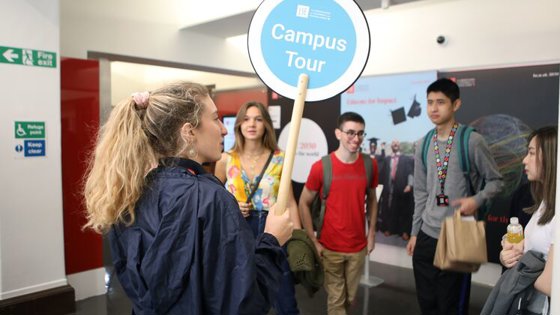
Come on a guided campus tour, attend an undergraduate open day, drop into our office or go on a self-guided tour.
Find out about opportunities to visit LSE.
Contact us
- Admissions: LSE Graduate Admissions Knowledge Base (an online resource for quick answers) - spp.admissions@lse.ac.uk
- Year one – LSE programme curriculum queries: mpa@lse.ac.uk
- Year two – University of Toronto programme queries: mga@utoronto.ca
- Fees and Funding queries: visit LSE Financial Support Office webpages
- Visa queries: visit LSE Student Advice and Engagement webpages
Who attends
Our LSE SPP degree programmes attract a highly diverse range of students from all over the globe. In 2024, we welcomed an intake of 391 students representing 69 nationalities.
The LSE SPP offers three MPA double degree programmes with partner institutions: Columbia SIPA, the University of Toronto and Sciences Po. Each double degree typically has a cohort of approximately 15 to 25 students. You'll benefit from belonging to a smaller cohort whilst also learning alongside the wider MPA cohort of approximately 80 students.
There is no formal work experience requirement. However, our students have a wide range of professional experience. Our MPA students typically have an average of 3.5 years' working experience.
We welcome students from wide-ranging areas of expertise including economics, law, social sciences, political science, business and international relations. This range of experience encourages a reflective approach to study that draws on skills and experience gained prior to the programme. This diversity is a major strength, providing many different national, economic and societal perspectives to problems and solutions of public policy.
When to apply
We consider applications for admission on a rolling basis and applications close once spaces are full. We encourage all applicants to apply as early as possible by our early deadline of 25 January 2027.
Please note the application deadline dates for other LSE scholarships listed under the "Scholarships, bursaries and loans" accordion below.
If you receive an offer of a place on the programme, we encourage you to aim to make your final decision and make your deposit payment by 1 May 2027 in order to secure your place on the programme.
Fees and funding
The table of fees shows the latest tuition fees for all programmes.
You're charged a fee for your programme. At LSE, your tuition fee covers registration and examination fees payable to the School, lectures, classes and individual supervision, lectures given at other colleges under intercollegiate arrangements and, under current arrangements, membership of the Students' Union. It doesn't cover living costs or travel or fieldwork.
Home
Year 1 (at LSE, 2027/28):
Home students: £35,900
Tuition fee deposit
If you’re made an offer, we’ll ask you to pay a tuition fee deposit, normally 10 per cent of the first-year tuition fee. Paying the deposit by the specified deadline will secure your place on the programme, subject to meeting the other conditions of your offer.
Your payment deadline will usually be the earlier of six weeks after the date of your offer or 20 days before the formal start date of the programme.
Tuition fee deposits are generally non-refundable, although refunds may be available in the circumstances set out in LSE’s Tuition Fee Policy for your year of entry. Your offer letter and other correspondence from the School will also provide information about how to pay and the circumstances in which a payment deadline extension or exemption from the deposit requirement may be considered.
Find out more about tuition fee deposits.
Year 2 (at University of Toronto, 2028/29):
Home students: visit University of Toronto website
Overseas
Year 1 (at LSE, 2027/28):
Overseas students: £35,900
Tuition fee deposit
If you’re made an offer, we’ll ask you to pay a tuition fee deposit, normally 10 per cent of the first-year tuition fee. Paying the deposit by the specified deadline will secure your place on the programme, subject to meeting the other conditions of your offer.
Your payment deadline will usually be the earlier of six weeks after the date of your offer or 20 days before the formal start date of the programme.
Tuition fee deposits are generally non-refundable, although refunds may be available in the circumstances set out in LSE’s Tuition Fee Policy for your year of entry. Your offer letter and other correspondence from the School will also provide information about how to pay and the circumstances in which a payment deadline extension or exemption from the deposit requirement may be considered.
Find out more about tuition fee deposits.
Year 2 (at University of Toronto, 2028/29):
Overseas students: visit University of Toronto website
At LSE, your tuition fees, and eligibility for any financial support, will depend on whether you’re classified as a home or overseas student (known as your fee status). We assess your fee status using The Higher education (Fee Limit Condition) (England) Regulations 2017.
Fee reduction
Students who have completed and passed an undergraduate degree at LSE and are beginning taught graduate study at the School are eligible for a 10 per cent tuition fee reduction.
Students who have completed and passed two or more Summer School courses are eligible for a five per cent reduction.
If you meet the eligibility criteria for both discounts, the higher 10 per cent discount rate will apply.
Find out more about the LSE alumni discount.
Funding for the first year, at LSE
We recognise that the cost of living in London may be higher than in your home town/city or country and we provide generous scholarships to help both home and overseas students.
We offer some needs-based awards for this programme, including the Graduate Support Scheme. Competition for these awards and scholarships is strong. To apply for an award, you must have an offer of a place and submit a Graduate Financial Support application before the funding deadline.
The funding deadline for needs-based awards from LSE: 22 April 2027.
In addition to our needs-based awards, we offer scholarships for students from specific regions of the world and awards for certain subjects.
You can’t apply for a Graduate Support Scheme or LSE scholarship once you’ve joined the School.
Please note: we do expect students who register for a programme to have sufficient funds for the duration.
Funding for the second year, at the University of Toronto
There is currently no funding available for the second year at the University of Toronto.
Government tuition fee loans and external funding
The UK Government offers a postgraduate loan for eligible students studying for a first master’s programme. This is designed to help with fees and living costs. Some other governments and organisations also offer tuition fee loan schemes.
Find out more about tuition fee loans.
Further information
Learn more about fees and funding opportunities.
Learning and assessment
How you learn
You'll normally have two to three hours of classroom-based teaching each week for each course that you take. This will usually add up to around 12-15 hours per week in class.
As the MPA is a full-time programme, you'd be expected to spend the equivalent number of hours studying as you'd spend working if you were in full-time employment (35-40 hours per week in total).
Teaching hours vary according to courses and you can view indicative details in the Calendar within the Teaching section of each course guide.
Teaching methods
Courses are taught in a range of formats depending on the teaching objectives and the subject. Some courses will follow a traditional format of lecture (one large group being taught together) and seminars (smaller groups which study concepts in a more informal style). Other courses will operate in a "Harvard" format, with the whole class in one space and the teaching method adapted to facilitate discussion and debate. You should expect a variety of teaching methods such as class exercises, team presentations, individual or group work, or case study discussions.
Office hours: LSE academic staff offer weekly office hours during term-time.
Academic mentor: you’ll meet with your academic mentor regularly to discuss your work. Your mentor can provide advice and guidance on academic issues and, where appropriate, personal concerns.
Other academic support: at LSE, we offer lots of opportunities to extend your learning outside the classroom.
LSE LIFE is a great place to get advice and practise the skills you’ll need during your studies and beyond.
Through LSE LIFE, you can:
- attend workshops on developing leadership skills, finding the right study/work/life balance and preparing for the world of work
- develop your reading, academic writing and critical-thinking skills
- gain experience of working in study groups and develop your cross-cultural communication and teamwork skills.
Disability and Mental Health Service: we want all LSE students to achieve their full potential. Students can access free, confidential advice through our Disability and Mental Health Service. This is the first point of contact for students.
School of Public Policy student groups, networks and development opportunities:
- Association of Public Policy Students (APPS)
The Association of Public Policy Students (APPS) is an elected body of SPP students that serve as a resource for the student community. Throughout the academic year, the APPS’s numerous committees and initiatives provide opportunities for students to engage with other classmates in professional and social activities.
- Womxn’s Network
The School of Public Policy’s (SPP) Womxn’s Network is a student-run organisation focused on the advancement and empowerment of students within the SPP and broader LSE community who are marginalised by the intersectionalities of gender and/or sexuality. The Network aims to further encourage the inclusion of marginalised voices within policymaking through various events and forums designed to promote learning and open discussion.
- Public Sphere Journal (PSJ)
The Public Sphere Journal (PSJ) is a journal of international policy studies produced by SPP students which features evidence-based research in economic policy, public management, international affairs, development studies and social policy. The PSJ offers students an opportunity to combine their unique professional and personal experiences to create a journal of international policy studies, from the initial call for papers through to the print and launch.
External networks
- Turner MBA Investment Impact Network and Training (MIINT)
The Turner MBA Investment Impact Network and Training (MIINT) Competition gives students the opportunity to gain hands-on experience in impact investing by sourcing and conducting due diligence on real-world, early-stage impact investment opportunities. The MIINT is supported by LSE's Marshall Institute. Hear from our 2025 MIINT participants.
- Global Public Policy Network (GPPN)
The Global Public Policy Network (GPPN) is a partnership between seven prestigious universities in public policy. GPPN is a platform for institutional partnership, research collaboration, and student exchange. Members of the GPPN have organised an annual international conference for the students and deans from member schools to meet and discuss pressing issues of global public policy. GPPN members have also established exchange and dual degrees programmes, allowing students to benefit from this international network of the most prestigious public affairs schools in the world. Hear from our 2024 GPPN conference participants.
LSE student societies and activities
Your time at LSE is not just about studying, there are plenty of ways to get involved in extracurricular activities. From joining one of over 200 societies, or starting your own society, to volunteering for a local charity, or attending a public lecture by a world-leading figure, there is a lot to choose from.
Life in London
As a student at LSE, you’ll be based at our central London campus. Find out what our campus and London have to offer you on academic, social and career perspective.
LSE is based on one campus in the centre of London. Despite the busy feel of the surrounding area, many of the streets around campus are pedestrianised, meaning the campus feels like a real community.
London is an exciting, vibrant and colourful city. It's also an academic city, with more than 400,000 university students. Whatever your interests or appetite you'll find something to suit your palate and pocket in this truly international capital. Make the most of career opportunities and social activities, theatre, museums, music and more.
Want to find out more? Read why we think London is a fantastic student city, find out about key sights, places and experiences for new Londoners. Don't fear, London doesn't have to be super expensive: hear about London on a budget.
Find out more about the teaching and other resources available to you at the Munk School of Global Affairs and Public Policy.
How you're assessed
First year at LSE
All taught courses include formative coursework which does not contribute towards the final grade. It's designed to help prepare you for summative assessment which counts towards the course mark and to the degree award. We use a range of formative assessment, such as essays, problem sets, case studies, reports, quizzes, mock exams and many others. Summative assessment may be conducted during the course or by final assessment/examination at the end of the course. An indication of the formative coursework and summative assessment for each course can be found in the relevant course guide.
Second year at University of Toronto
Graduate destinations
Overview
Our graduates have leveraged the combination of LSE’s policy and economic training with the Munk School’s global affairs and strategic focus to pursue careers across government, the private sector, and international organisations in Canada and abroad.
Government and public policy
- Federal government roles in Canada, including the Government of Canada’s Advanced Policy Analyst Program (APAP) and policy positions at ISED
- Provincial and municipal policy and strategy roles, including at the Ontario Ministry of Labour and Treasury Board Secretariat
- Public sector roles outside Canada, including at the UK energy regulator Ofgem
Private sector, finance and strategy
- Finance and investment roles at organisations including UBS and the Arctic Economic Development Corporation
- Strategy, technology and consulting roles at organisations including AWS and Clipbook
- Threat intelligence and strategic roles within the financial and technology sectors
International organisations, development and NGOs
- Roles at international organisations including UNESCO and GIZ
- International development and climate resilience roles at organisations including the Aga Khan Foundation
- Policy, advocacy and research roles at organisations including Results Canada and the Asia Pacific Foundation of Canada
Find out more about our alumni and their career journeys after graduation.
Explore the graduate destinations for SPP students
SPP Alumni
The SPP has an active global community of over 3,000 alumni. Our international network of alumni not only transform the world around them by designing policy to tackle some of the world’s leading problems in the top levels of government, international organisations, and NGOs – but also makes our community a vibrant and supportive one long after graduation.
As well as belonging to LSE School of Public Policy’s alumni network, SPP students will also belong to LSE’s prestigious alumni network of over 220,000 alumni across the world.
SPP alumni connect regularly with our students throughout their studies and share their expertise through our alumni/student mentoring scheme and our career Q&A series.
Alumni benefits
As part of LSE SPP’s alumni engagement programme our alumni stay connected via our regular newsletters and in-person and virtual professional development and social events throughout the year. Our annual "Alumni Symposium" offers a space for alumni to reconnect and benefit from the lifelong SPP network. Hear our alumni discuss the benefits of being able to reconnect at LSE to hear from expert panels and share their experiences at the 2025 Alumni Symposium, which focused on themes of "The New Geoeconomics: Policy making in a Fragmented World".
Alumni in action
Learn more about our alumni and how they are making an impact around the world.
Career support
SPP Professional Skills Accelerator
Alongside your degree the School of Public Policy requires that you complete the Professional Skills Accelerator, a programme of applied sessions designed to help you to develop and refine the skills required of highly capable public policy professionals.
The sessions are delivered by trainers and educators and take place across the year, on subjects including leadership, interview skills, data visualisation, negotiation, and persuasive communication.
You must complete four sessions across the first year of your programme.
As well as attendance at these sessions, you'll be required to submit two short pieces of writing, which reflect on your professional experience and ability and identify areas where you'd like to improve.
For reference, the sessions in 2026/7 are taking place during the Autumn and Winter terms at weekends, and those in the Spring Term are scheduled on weekdays in and around the exam period. The Professional Skills Accelerator will be formally launched to new students during the Welcome period.
Details of the 2027/28 Professional Skills Accelerator are to be confirmed.
Alumni mentorship and Q&As
Our alumni connect regularly with our students throughout their studies and share their expertise through our alumni/student mentoring scheme and our career Q&A series.
Policy in Practice (PiP) seminars
We run regular seminars through the year to connect you with policy practitioners in a range of fields, either to learn more about the work of particular organisations and sectors or to develop new skills. These seminars provide students with an opportunity to connect classroom learning to real world scenarios.
At the heart of the SPP is an emphasis on helping our students shape and enhance their future careers in policy-related fields. SPP students come to LSE from very diverse professional backgrounds, and it's our priority to support each of you as you move to the next stage of your career.
LSE Careers offers students a programme of support throughout your studies and after graduation.
In particular, you'll have access to:
- one-to-one coaching in all aspects of career planning and professional development with the School of Public Policy's Careers Consultant
- Q&A events with SPP alumni who are working in particular sectors of interest such as international organisations and consultancy
- a weekly SPP Careers newsletter includes relevant short-term and long-term job opportunities and events
- Networking events with employers (specific for SPP students)
- Careers Impact Sessions which encourage students to consider their professional values, strengths and career goals as they navigate and manage evolving career journeys. SPP alumni contribute by sharing their experiences and insights, bringing the learning to life and creating opportunities to connect and network with alumni from across a range of related careers.
In addition, you'll benefit from LSE Careers activities and support including:
- Professionals at LSE programme designed for students and alumni with 5+ years professional experience. The programme includes events focused on employer and sector perspectives, career strategy and leadership workshops and skills focused events and panel discussions.
- access to LSE MyCareer, listing hundreds of opportunities, from short-term volunteering and internships to full-time positions for experienced professionals
- LSE Careers events throughout the year including career fairs, employer presentations, recruitment and networking events, skills seminars with employers
- specialist careers seminars run by LSE Careers, including sessions on CVs and cover letters, career management, networking, interviews and advice specific to particular employment sectors.
Many leading organisations give careers presentations at the School during the year. LSE Careers has a wide range of resources available to assist students in their job search. Find out more about the support available.
Additional resources
- Learning Lab
- Digital Skills Lab
- LSE LIFE
- LSE Generate
- LSE Volunteer Centre
Find out more
Explore LSE
Student life

Student support

Accommodation

Meet, visit and discover LSE