Managing Religious Diversity in the Middle East: The Muhasasa Ta'ifia in Iraq, 2003–2018
Principal Investigator: Professor Toby Dodge
Duration: September 2019–September 2022
Supported by: The Henry Luce Foundation
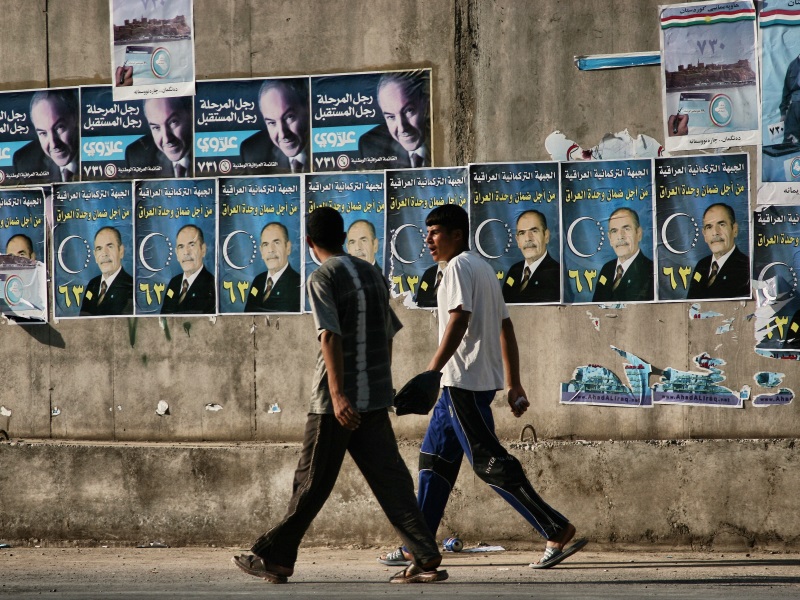
In 1992, a group of exiled Iraqi opposition activists who had gathered at a conference in Salah Al-Din, proposed the division of government posts through the Muhasasa Ta’ifia or sectarian apportionment as an alternative to the rule of Saddam Hussein's Ba’ath Party. Accordingly, the most senior political offices would be allotted through the religious and ethnic identities of their incumbents. This quota system was then adopted, post-2003, by the victorious US-led forces that removed the Ba’ath Party after thirty-five years of rule.
The Muhasasa Ta’ifia shaped the formation of Iraq’s first governing body, the Iraqi Governing Council in 2003 and then every post-election government from 2005 onwards. It has evolved into a formula placed at the centre of an elite pact that translates success at the ballot box into a points-based system that awards government office to those parties claiming to represent the different ethno-religious communities, reserving the Presidency for a Kurd, the position of Prime Minister for a Shi’a and the Speaker of Parliament a Sunni.
This project examines the efforts of Iraq’s post-2003 ruling elite, in partnership with the United States, to build a democratic system to manage religious and ethnic diversity. It aims to investigate the creation and evolution of the Muhasasa Ta’ifia through interviews with senior Iraqi officials, public opinion polls, election data and detailed sociological research. It also examines the system’s influence on Iraq’s politics, society, government incoherence and the high levels of violence that have dominated the country since regime change.
The project features three international workshops, organised in Baghdad, at LSE and in Washington DC, that will bring Iraqi civil society activists, analysts and decision-makers together in discussion with academic experts on religious and ethnic identities.
A comprehensive list of academic and policy papers, book chapters, blog posts, videos and podcasts related to this research project can be found here.
This project is funded by an award from the Henry Luce Foundation, the first of its kind to be gifted to LSE.
Research Team
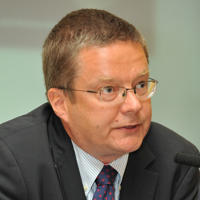
Professor Toby Dodge | Kuwait Professor
Toby can be reached at b.t.dodge@lse.ac.uk
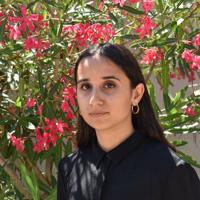
Taif Alkhudary | Research Consultant
Taif is an Iraq-focused research consultant for
Managing Religious Diversity in the Middle East: Al Muhasasa Ta'ifia in Iraq, 2003-2018 and PeaceRep Iraq.