

Our Team
The Human Impact Pathway (HIP) is a not-for-profit social venture, supported by LSE Innovation and the United Nations’ Trust Fund for Human Security, helping business and communities to work together to manage risks, seize opportunities, and build human security.
Through a unique bottom-up and people-centred multi-stakeholder methodology, HIP provides guidance in local steps to social impact. HIP helps companies and international organisations better understand business footprint in high-risk and volatile contexts. HIP offers research and consultancy in tailored solutions to help design, manage and measure impact, particularly in complex contexts.
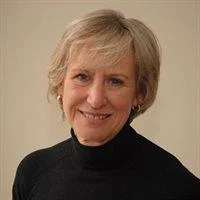
Mary Martin heads the Human Impact Pathway and is senior policy fellow at LSE IDEAS. From 2017-2024 she was Director of the UN Business and Human Security Initiative , working with the United Nations and the private sector to contribute to the fulfilment of Agenda 2030 and the Sustainable Development Goals, through trialling an innovative model of multi-stakeholder partnership, the Human Security Business Partnership Framework. She has worked with UNDP, UNHCR and the Colombian government on implementation of the 2016 Colombian peace and stabilisation process, with companies in Mexico and Africa to improve their stakeholder engagement strategies. She is editor of the Routledge series Studies in Human Security and author of ‘Corporate Peace. How global business shapes a hostile world’. She has a PhD in International Relations from Cambridge University.

Maria Prandi is expert on business and human rights at the Human Impact Pathway. She has over 20 years of experience advising global companies, governments, and international organisations on business and human rights linking her work with some key United Nations human rights agencies and procedures. She has provided impact assessments, studies and strategy advice in a wide range of sectors and countries over the last decade. She was head of the Business and Human Rights programme at the Universitat Autònoma de Barcelona and researcher and lecturer at the Institute of Social Innovation at Esade Business School. She holds a post-graduate diploma (DEA) and a master’s in International Affairs from UAB. She has published articles and books and has delivered trainings on the role of the private sector in relation to human rights, peace-building and humanitarian crises. She was member of the UNGC expert group on Responsible Business and Investment in High-Risk Areas. She is also founder and director of BHR in Spain.
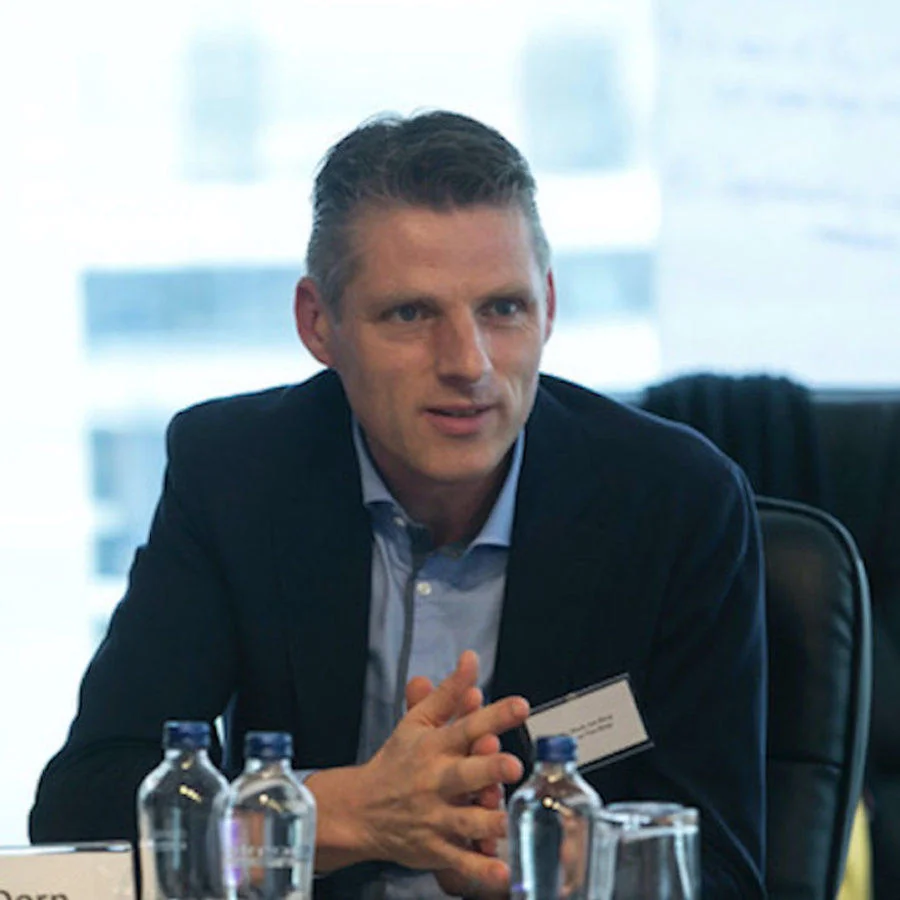
Mark van Dorp is lead field researcher at the Human Impact Pathway and research associate at LSE IDEAS. He is an economist with over 25 years of experience in the field of private sector development in emerging markets and fragile and conflict-affected settings.He advises and supports companies and investors in a context of conflict and fragility, enabling them to operate in a conflict-sensitive way and in a way that fosters peace and stability. Key areas of expertise are value chain analysis, responsible business conduct, ESG (environmental, social and governance) risks and impacts, stakeholder engagement, human security, peace responsive investment, conflict analysis and human rights due diligence. He has extensive knowledge of Africa, the Middle East and Latin America. Mark has worked for multinational companies, universities, NGOs, financial institutions (World Bank/IFC, FMO and KfW), UN agencies (UNDP, UNHCR, IOM, ITC), the Dutch government and the European Union. He holds a master’s degree in economics from the University of Amsterdam. He is also founder and director of Bureau van Dorp and co-founder of Elevate.

Gorka Polite is technology co-ordinator at the Human Impact Pathway. He has four decades of hands-on experience in information technology, and is a specialist in deploying a diverse array of technologies across various sectors, combined with managing different corporate reporting formats. He has worked as a board member of a major global company and now runs his own business since 2008. He has extensive experience in consultancy with multinational companies.

Dr Santiago Alvarez is information manager at the Human Impact Pathway. He is data scientist and expert in large-scale data collation, handling and analysis, particularly of time series, indicators, and data for monitoring socio-ecological impacts. He has conducted research in several European institutes, combining global data with local information and particularly integrating indigenous/local adaptations to climate change with data from global models. He holds a PhD in Ecology and Environmental Management from Wageningen University.

Dr Eneko Sanz is impact measurement analyst at the Human Impact Pathway. He has over 15 years of consulting experience in both public and private sectors across Europe, South America and Asia, including the Organisation for Security and Co-operation in Europe (OSCE). He specialises in ethics and social impact assessment and evaluation, particularly in complex and conflict-prone environments. He holds a PhD in International Relations from Universitat Autònoma de Barcelona.

Dr Pieter de Wit is project manager at the Human Impact Pathway and research associate at LSE IDEAS. As researcher and consultant he specialises in the role of business in conflict-contexts, social sustainability, and human security. His background is in international relations and business in society, and he holds a PhD in Management and Organisation. He aims at finding win-wins between business, affected communities, and societies more broadly.

Dr Sabine Selchow is associate expert at the Human Impact Pathway. She is senior research fellow in the ERC-funded project 20th Century International Economic Thinking and the Complex History of Globalisation at the European University Institute, Florence. Previously, she was researcher at LSE Global Governance and in the Civil Society and Human Security Research Unit at the London School of Economics (LSE), including as research fellow in Mary Kaldor's ERC-funded project "Security in Transition" and in Ulrich Beck's "Methodological Cosmopolitanism: In the Laboratory of Climate Change" (based at LMU, Germany). She has extensive teaching experience, including at the LSE and Sciences Po, Paris. She holds a PhD in Government from the London School of Economics (LSE).