

Militarising Humanitarian Assistance during Epidemic Outbreaks

Understanding Ebola in Sierra Leone
This project assessed the effects of militarised humanitarian responses to Ebola in Sierra Leone on public authorities, during and after the 2014-16 epidemic. It analysed the ways in which the accountability of humanitarian actors to Ebola-affected populations was affected by the implementation of enforcement procedures. In particular, the project addressed the gaps in data informing what role militaries played during the outbreak, and whether it was in fact marginal or hindered health efforts.
Empirical data informing debates on military involvement in Sierra Leone's Ebola outbreak are limited, and it is far from clear what actually occurred.
Background
The securitisation of global health is not a new phenomenon. Humanitarian assistance during outbreaks in resource poor nations has, and continues to be, shaped by broader shifts in geopolitics, while medical aid has historically been linked to military actions, even when it has purported to be neutral. In this sense, the Ebola outbreak in West Africa was less of a radical shift than some of those involved seemed to suppose. Nevertheless, for a Security Council Resolution to declare the outbreak "a threat to international peace and security" was a pivotal new step in legitimising enforcement for a public health purpose.
By linking the Ebola outbreak to state instability as well as regional and global security, the UN Security Council facilitated a highly militarised approach to treatment and containment, one not explicitly motivated primarily by the health needs of the affected population, but by the potential political consequences of their health crises for others. It provided justification for forms of public authority to impose quarantine and enforced containment on a large scale.
In practice, while the nature of military engagement varied between Guinea, Sierra Leone and Liberia, all three governments used their armies to control access to hospitals and Ebola Treatment Centres, identify new cases, impose roadblocks and assist with ‘lockdowns’. A further 5,000 international military personnel were deployed by China, Canada, France, Germany, UK and USA assist across the region.
Researchers

Professor Tim Allen is Principal Investigator for the Centre for Public Authority and International Development.
Professor of Development Anthropology in LSE's Department of International Development and Director of the Firoz Lalji Centre for Africa, Tim Allen has expertise in the fields of complex emergencies, ethnic conflict, health and forced migration.
Email: t.allen@lse.ac.uk

Professor Melissa Parker is an Investigator for CPAID and a medical anthropologist at the Department of Global Health and Development, London School of Hygiene and Tropical Medicine.
Melissa has worked on a range of global health issues in Sierra Leone, Sudan, Tanzania and Uganda and in 2014 helped to establish the Ebola Response Anthropology Platform.
Email: melissa.parker@lshtm.ac.uk

Tommy Hanson
Tommy Matthew Hanson is a Lecturer in the Department of Sociology and Social Work, School of Social Sciences and Law, Njala University and currently pursuing PhD in Medical Anthropology.
Email: tommymhanson9020@gmail.com

Dr Ahmed Vandi
Ahmed Vandi is a Lecturer at the School of Community health Sciences, Njala University and the Acting Head of the Department of the Community Health and Clinical Studies.
Email: vandiahmed63@gmail.com
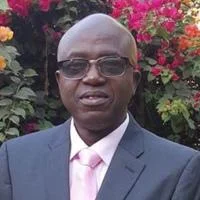
Dr Lawrence Sao Babawo
Lawrence Sao Babawo is a Senior Lecturer at the School of Community Health Sciences in the Department of Nursing, Njala University. He is a member of the government's COVID-19 Scientific, Technical, Advisory Group for Emergencies.
Email: lbabawo@njala.edu.sl