

Women's Liberation Movement

"We are not attempting the impossible. To try to explain Women's Liberation in one quick, easy lesson would be both ludicrous and wrong." - Spare Rib, July 1972
Introduction
We hold the personal papers of activists, the campaigning papers of organisations and the magazines and newsletters of women’s liberation groups. There are also badges, postcards and posters on the theme of women’s liberation and equal opportunities.
Women's Liberation Movement resources guide
The Women’s Liberation Movement began as a network of local groups communicating its message through its newsletters. Members also attended national conferences which allowed discussion of issues and strategy.
- Anna Davin’s archive contains papers from the first national WLM conference which was held in Ruskin College, Oxford, in 1970.
- Amanda Sebestyen’s archive contains national and regional conference papers.
- Shrew, newsletter of the London Women’s Liberation Workshop, formed in 1969.
The campaign for 'free contraception and abortion on demand' was one of the four main demands agreed at the first national conference in 1970.
- David Steel, Liberal MP, put forward the 1967 Abortion Act which was supported by the Abortion Law Reform Association.
Campaigns took various forms both nationally and internationally, from public demonstrations, to setting up support centres, to offering free legal advice to women.
- Tamar Karat helped to set up the Kingsgate Women’s Centre in West Hampstead in 1972.
- CEDAW The Convention on the Elimination of All Forms of Violence Against Women (CEDAW) was adopted by the United Nations (UN) General Assembly in 1979.
Activists demanded that women should receive equal pay with men who did equivalent work, and have equal opportunities in the job market. This led to equal-rights legislation.
- Sheila Rowbotham, historian and writer, campaigned to unionise the work of night cleaners.
- Women in Media worked tirelessly to ensure the passing of the Sex Discrimination Act 1975.
The Women’s Liberation Movement made many men question their relationship with women, child care and domestic life.
- Sheila Rowbotham’s archive contains papers on men’s groups which emerged in the 1970s.
- Read issues of ‘Achilles Heel’.
There is a long history of women fighting for the right to participate in formal politics from when women could do this in 1918.
When Margaret Thatcher became Prime Minster in 1979, only 19 women MPs were elected out of 635 members. Lesley Abdela founded The 300 Group to encourage more women to stand as MPs and to work in public life.
Many feminists of the Women’s Liberation Movement were very creative.
- See Red Women’s Workshop was a radical campaigning and publicising organisation run as a collective until the late 1980s.
- Sheba Feminist Press was a small, independent publishing collective which published material from writers with diverse backgrounds.
- The OnlyWomen Press was established in 1974 by a collective of four women whose aim was to publish feminist literature which challenged gender and sexual stereotypes.
Using Women's Liberation Material at LSE
You can search the Archives Catalogue to find more material using terms like "women's liberation movement", "sexism", "equal opportunity", "sex discrimination", "health".
You can search Library Search for journal titles, such as Red Rag, Shrew, WIRES, Outwrite, the London Women's Liberation Newsletter.
Most of the material highlighted here is part of our special collections, which are open to all but must be consulted in our reading room.
Find out how to book your place and order material
If you need specific help with any of the collections mentioned here, get in touch with our Curator for Equality, Rights and Citizenship, Gillian Murphy.
Digital resources
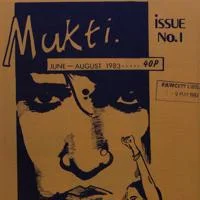
‘Mukti’ was a collectively-run British Asian feminist magazine founded in 1983 by a group of Asian women from London and Birmingham.

Listen to interviews of leaders from the women’s voluntary and community sector, organised by the Women’s Resource Centre.
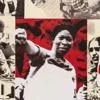
See Red Women’s Workshop was founded in 1974 and produced posters challenging sexism and providing creative alternatives.
Blogs
Video content
Get involved?
We are interested in what you find in the archive. We’d like to hear from you if you are working with women’s liberation movement material and would like to share your research in this area. Get in contact.
The Women's Library at 100
